What to eat in Crete: traditional dishes worth getting to know
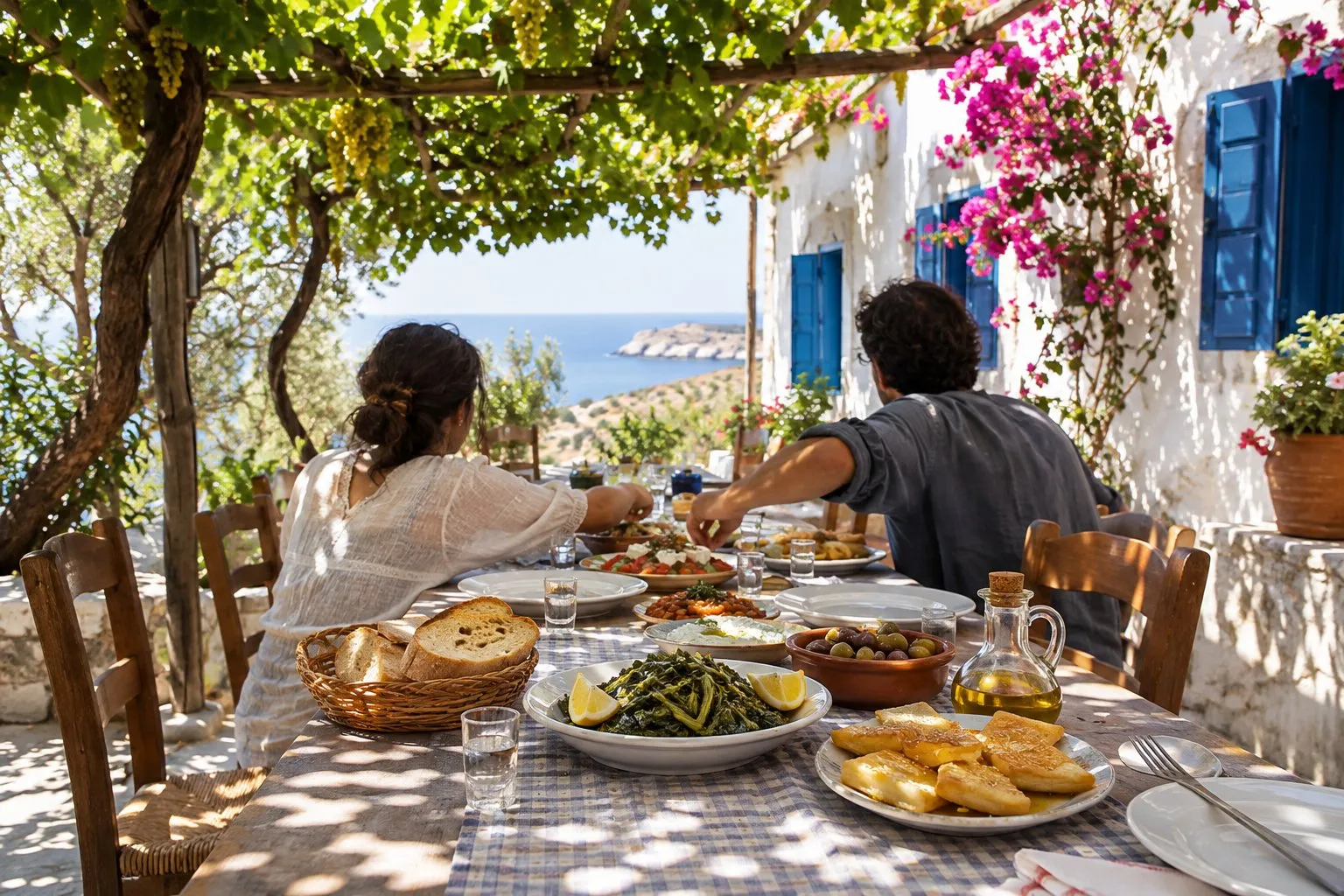
Cretan cooking relies on a few very good ingredients: olive oil, seasonal vegetables, pulses, sheep’s and goat’s cheeses, herbs from the hills and, less often, meat. Many dishes were born in village homes and every family has its own version, so don’t be surprised to find the same name with slightly different recipes from one taverna to another.
Here are the dishes most worth recognising on a menu, with their Greek names to make them easier to spot.
To start: dishes to share
In Crete you order for the middle of the table, and these dishes usually open the meal.
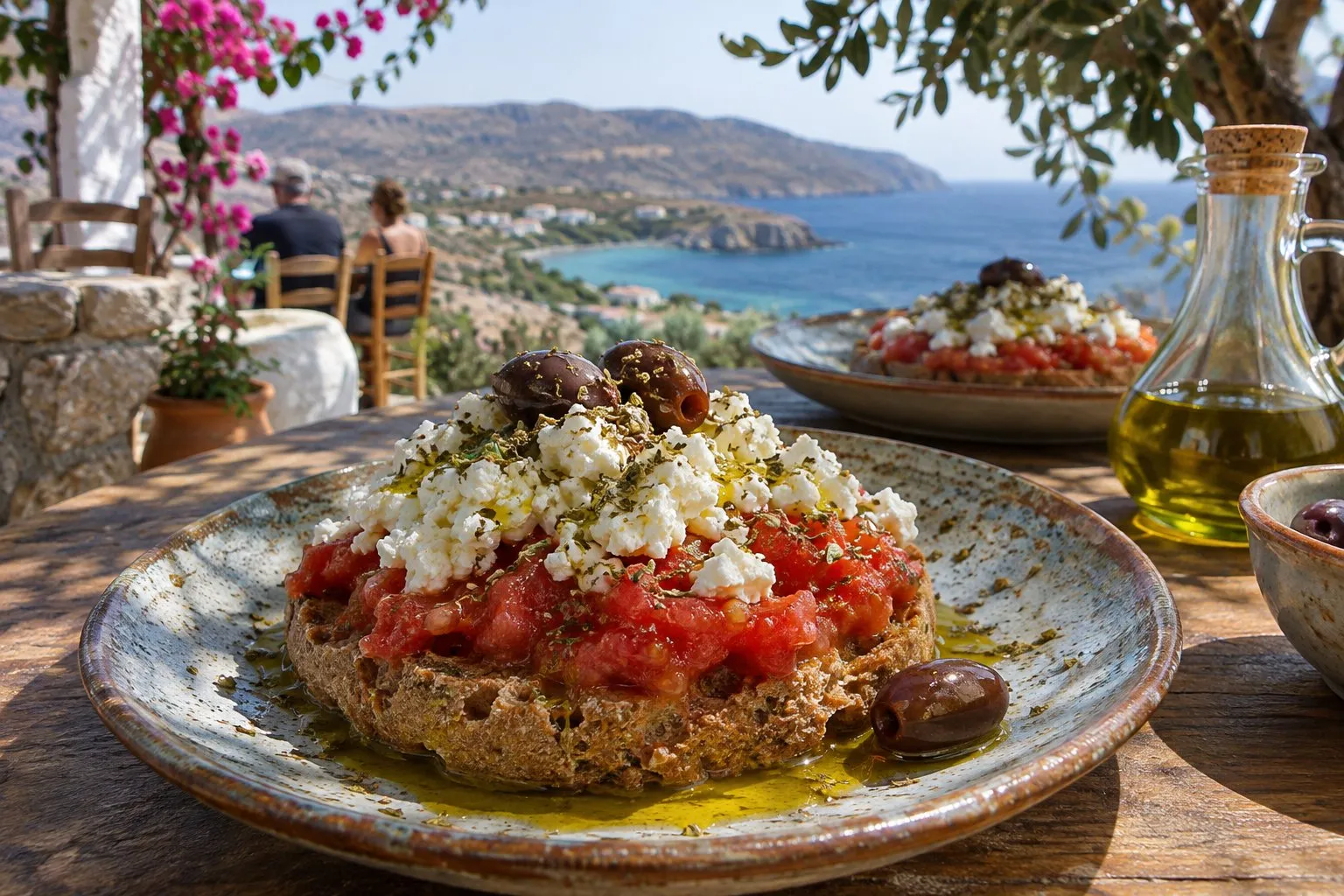
Dakos (ντάκος)
It’s probably the island’s best-known starter. The base is paximadi, a barley rusk baked twice until hard, which is moistened a little and topped with grated tomato, cheese (mizithra, xinomizithra or feta), olive oil and oregano. The bread gradually softens in the tomato juice, so it’s best not to leave it on the table for long.
Horta (χόρτα)
Boiled greens, wild or from the garden, dressed with oil and lemon. What reaches the plate depends on the season: in the cooler months stamnagathi (σταμναγκάθι), a spiny chicory much prized on the island, is common, and in summer vlita (βλίτα), amaranth leaves, are more usual. It’s a humble dish, but one of the most Cretan.
Kalitsounia (καλιτσούνια)
Small pastries filled with fresh cheese, usually mizithra or anthotyros, sometimes with mint or herbs. There are savoury and sweet ones, with honey on top, and the shape changes from area to area: closed into a half-moon or open like a small star, with the cheese showing. They’re typical of Easter, though you can find them all year round.
Sfakianes pites (σφακιανές πίτες)
They come from Sfakia, in the southwest of the island. They are very thin flatbreads with mizithra inside, cooked in a pan with hardly any fat and served with thyme honey. They work as a dessert and also for breakfast; we talk about them in our article on breakfast in Crete.
Traditional dishes
Boureki (μπουρέκι)
Typical of the Chania area: thin layers of potato and courgette with mizithra and mint, baked slowly. In summer some people add tomato, and there are versions with pastry and without.
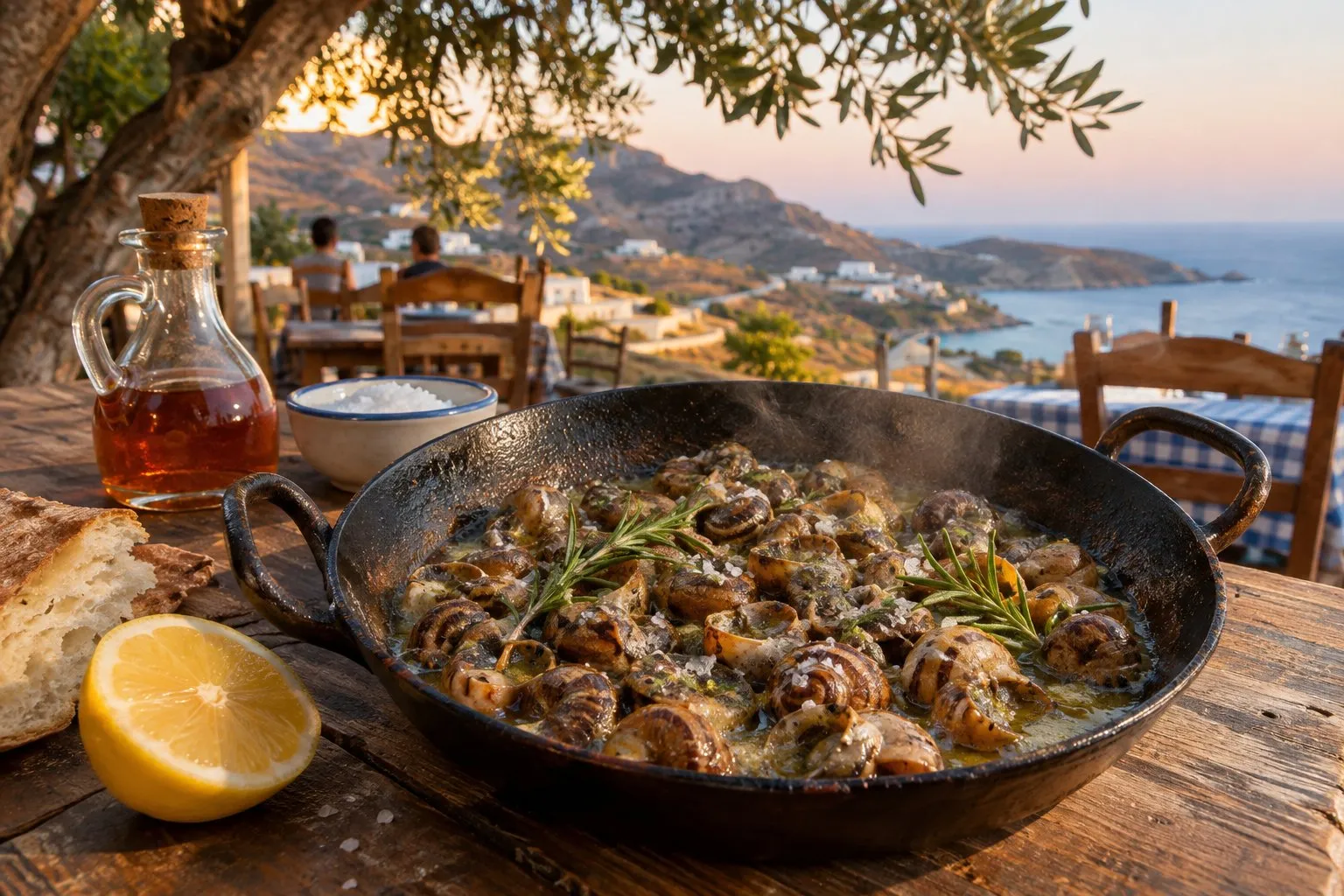
Chochlioi boubouristi (χοχλιοί μπουμπουριστοί)
Snails, one of the island’s most characteristic dishes. They are placed upside down in a hot pan with salt and oil, and finished with vinegar and rosemary. The most widespread explanation is that the name alludes to this “upside-down” way of cooking them, although some link it to the sizzling of the pan. They are gathered after the rains and are especially popular during the Orthodox Lent, because they’re considered compatible with fasting.
Gamopilafo (γαμοπίλαφο)
The “wedding rice”. It is cooked in the broth left from boiling lamb or goat and finished with staka butter and lemon, until creamy and glossy. Traditionally it is served at weddings and celebrations, so it doesn’t always appear on the menu. If you see it, order it.
Staka (στάκα)
Not a dish but a dairy product: the cream from sheep’s or goat’s milk, cooked with a little flour and salt. A butter, stakovoutyro, is also made from it. It’s very rich and is eaten, for example, with fried eggs.
Apaki (απάκι)
Pork marinated in vinegar and smoked with aromatic herbs and woods, such as sage or thyme. It’s served sliced or sautéed, often as a meze to go with raki.
Antikristo (αντικριστό)
Lamb, and sometimes kid, roasted for hours in large pieces skewered on stakes around the fire, not over it. It’s a tradition of the mountain shepherds and takes time and space, so not every taverna offers it.
Cretan cheeses
Cheese appears at almost every meal. These are the ones you’ll see most:
- Graviera (γραβιέρα): a mature cheese, mostly from sheep’s milk. Cretan graviera has protected designation of origin. It’s eaten on its own, fried or with honey.
- Mizithra (μυζήθρα): a fresh whey cheese, mild, with a texture reminiscent of ricotta. There is also a mature, dried version.
- Anthotyros (ανθότυρος): from the same family as mizithra; eaten fresh or, once dried, grated.
- Xinomizithra (ξινομυζήθρα): soft and tangy, also with protected designation of origin. It’s common on dakos.
In the east of the island, the Sitia area has its own soft cheese with a designation of origin, xigalo (ξίγαλο Σητείας). If you’re heading that way, on the excursion to Sitia and the Vai palm grove, look out for it.
Season and region: what changes
Cretan cooking follows the calendar closely. The vegetables change from month to month, summer oven dishes feature tomato, courgette or aubergine, and snails and a good part of the wild greens appear mainly in the rainy months. That’s why short menus and dishes of the day are usually the best bet.
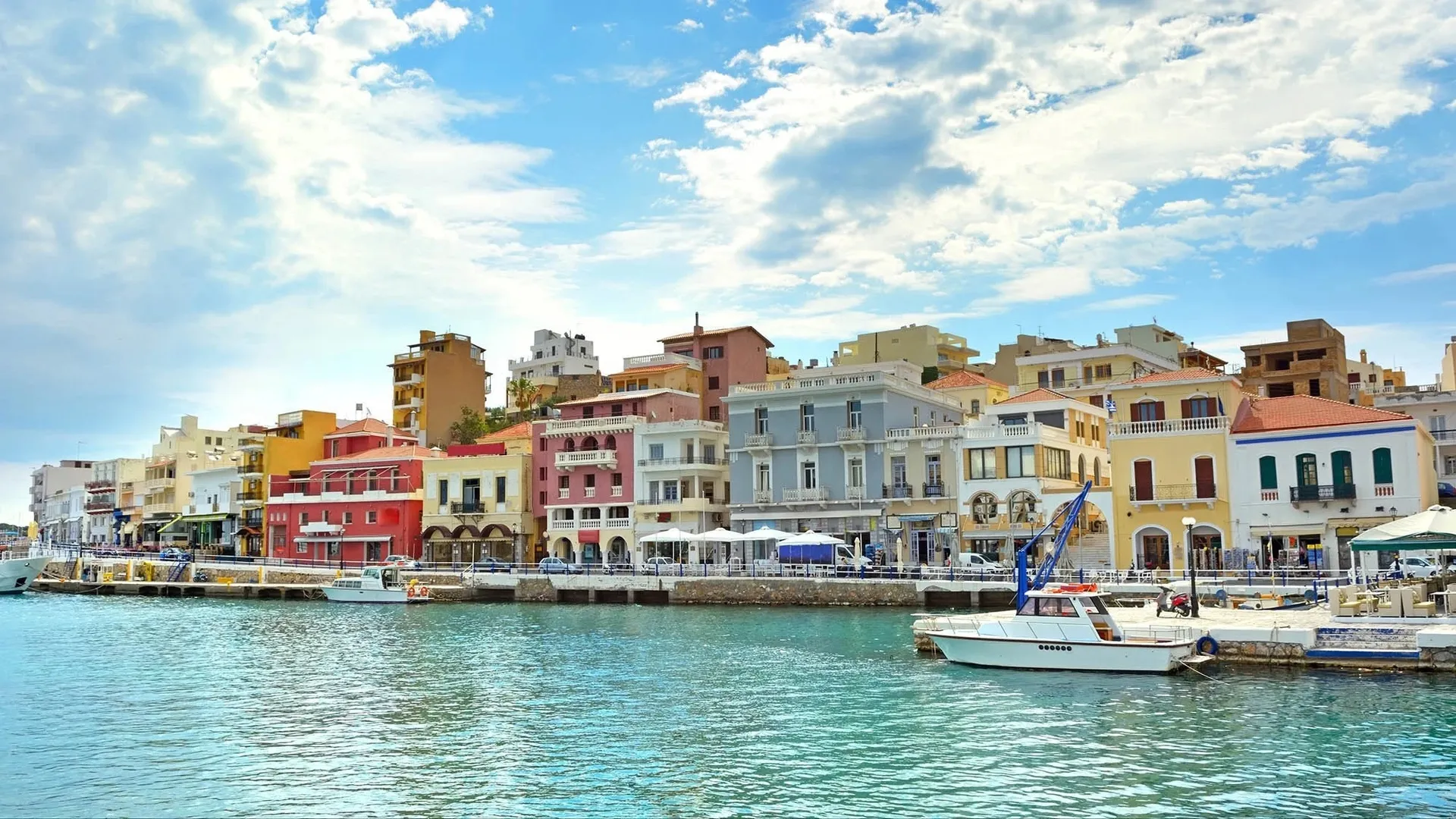
There are also differences from one area to another. Boureki and bougatsa with mizithra are associated with Chania, pites with Sfakia and xigalo with Sitia. That a dish isn’t on the menu of a taverna in Agios Nikolaos doesn’t mean it isn’t Cretan: it may come from another part of the island or belong to another time of year.
How to order
- Order several dishes to share: that way you try more things.
- Ask what’s on today. The dishes of the day (μαγειρευτά, mageirefta) are usually the most homely.
- Don’t be afraid of the oil. It’s the basis of everything; if you want to know more, read our article on Cretan olive oil.
- Leave room for the end. In many tavernas, the meal ends with a little raki and something sweet.
And to choose where to sit, there’s our guide to choosing a taverna in Agios Nikolaos.
Before you sit down at the table
You don’t have to try everything on one trip. Start with a dakos, some horta and some kalitsounia, ask what’s in season and let the rest come as the days and places allow. Menus change over the course of the year, so if a name doesn’t ring a bell, ask what’s in it.