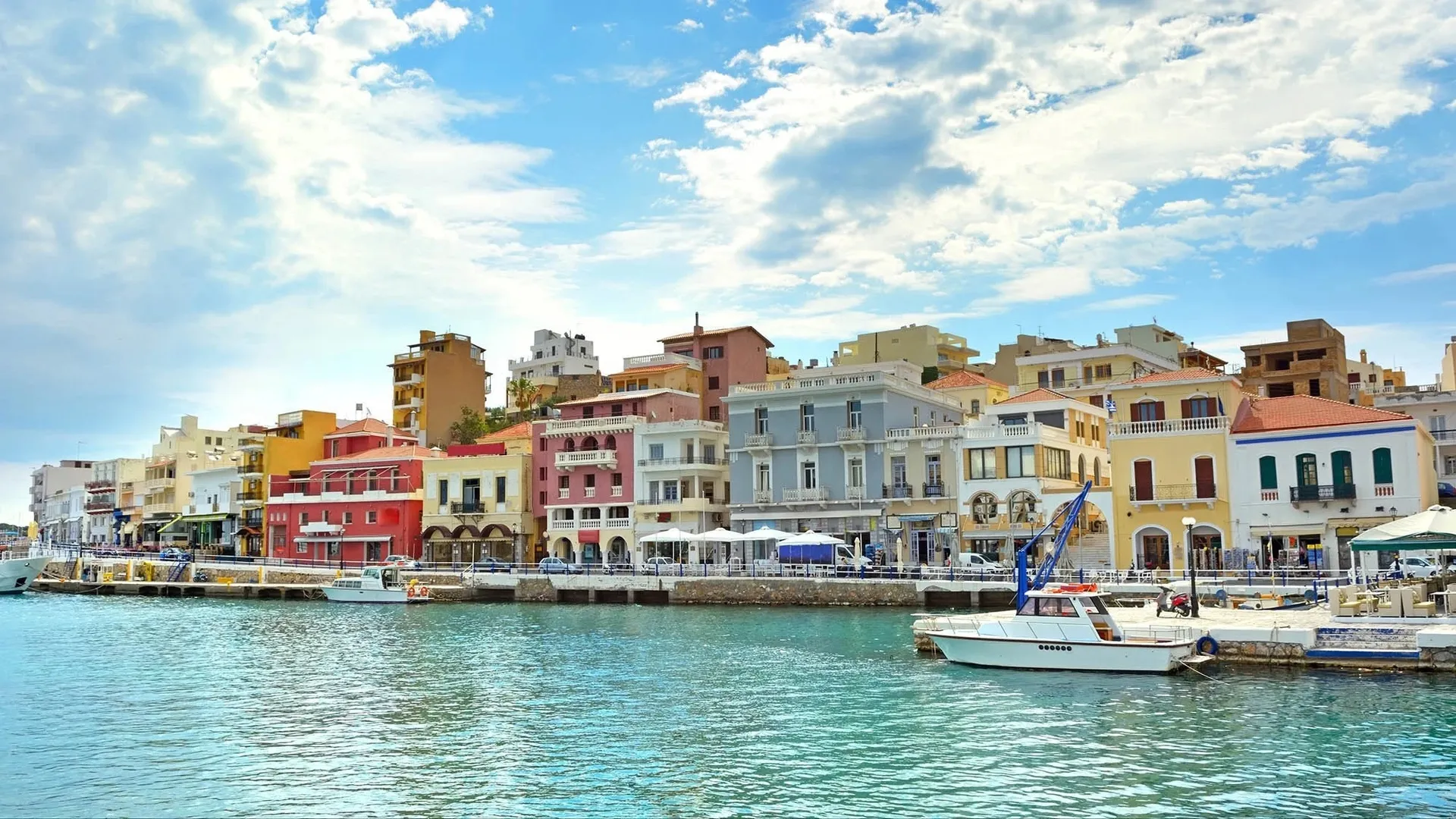
Cretan olive oil: what to look for and where to taste it
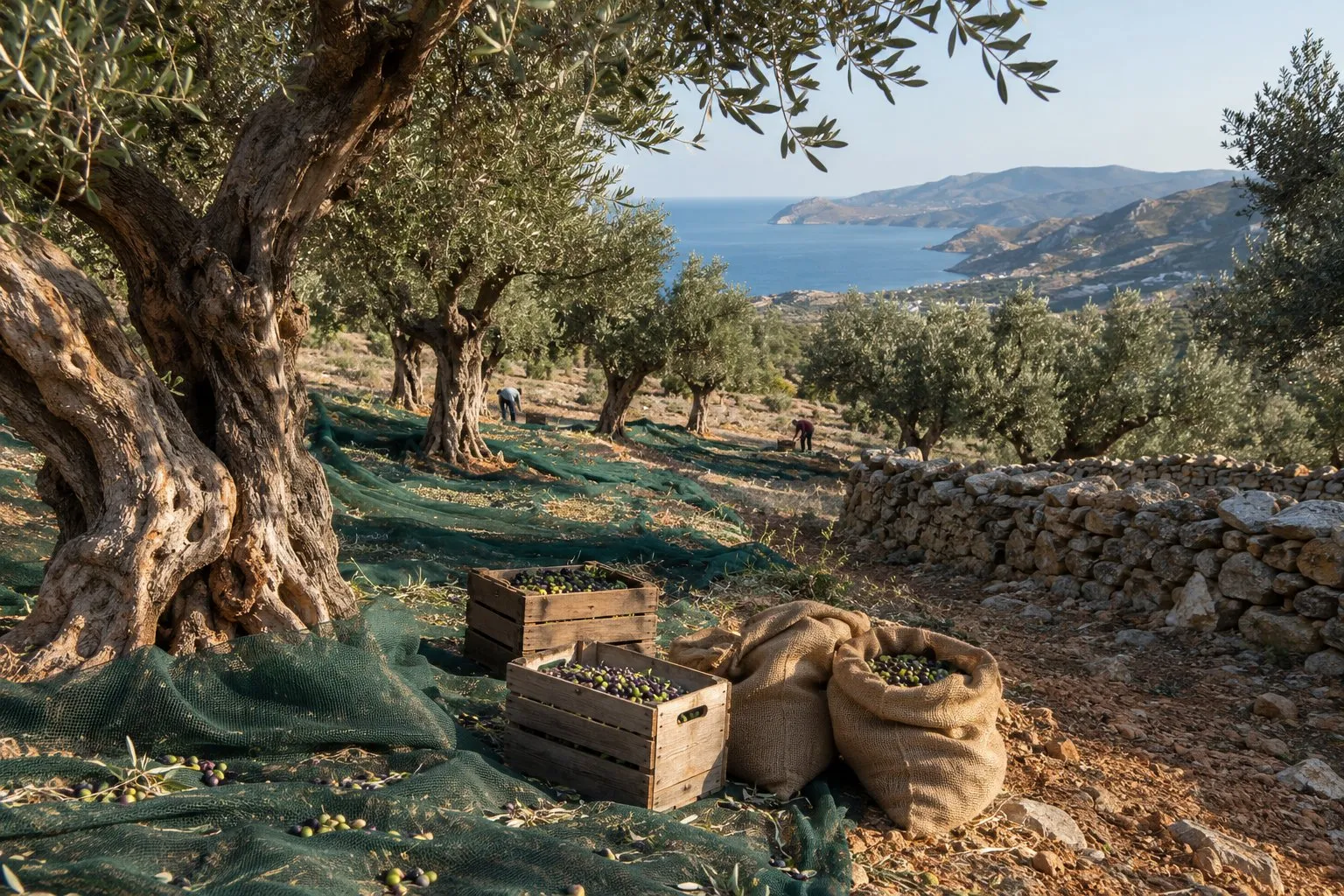
In Crete olive oil is in almost everything: in the salad, in braised vegetables, on the breakfast bread and in a good part of what comes out of a taverna kitchen. Here we tell you what makes Cretan oil special, how to read a label and where to taste it near Agios Nikolaos.
A very ancient tradition
The olive tree has been cultivated in Crete since Minoan times. At the Palace of Knossos you can still see the great clay jars, the pithoi, where products such as oil, wine or grain were stored.
Today olive groves still dominate the landscape, from the coast to the mountain slopes, and in many villages families have their own trees and their own oil for the whole year.
Koroneiki, the island’s olive
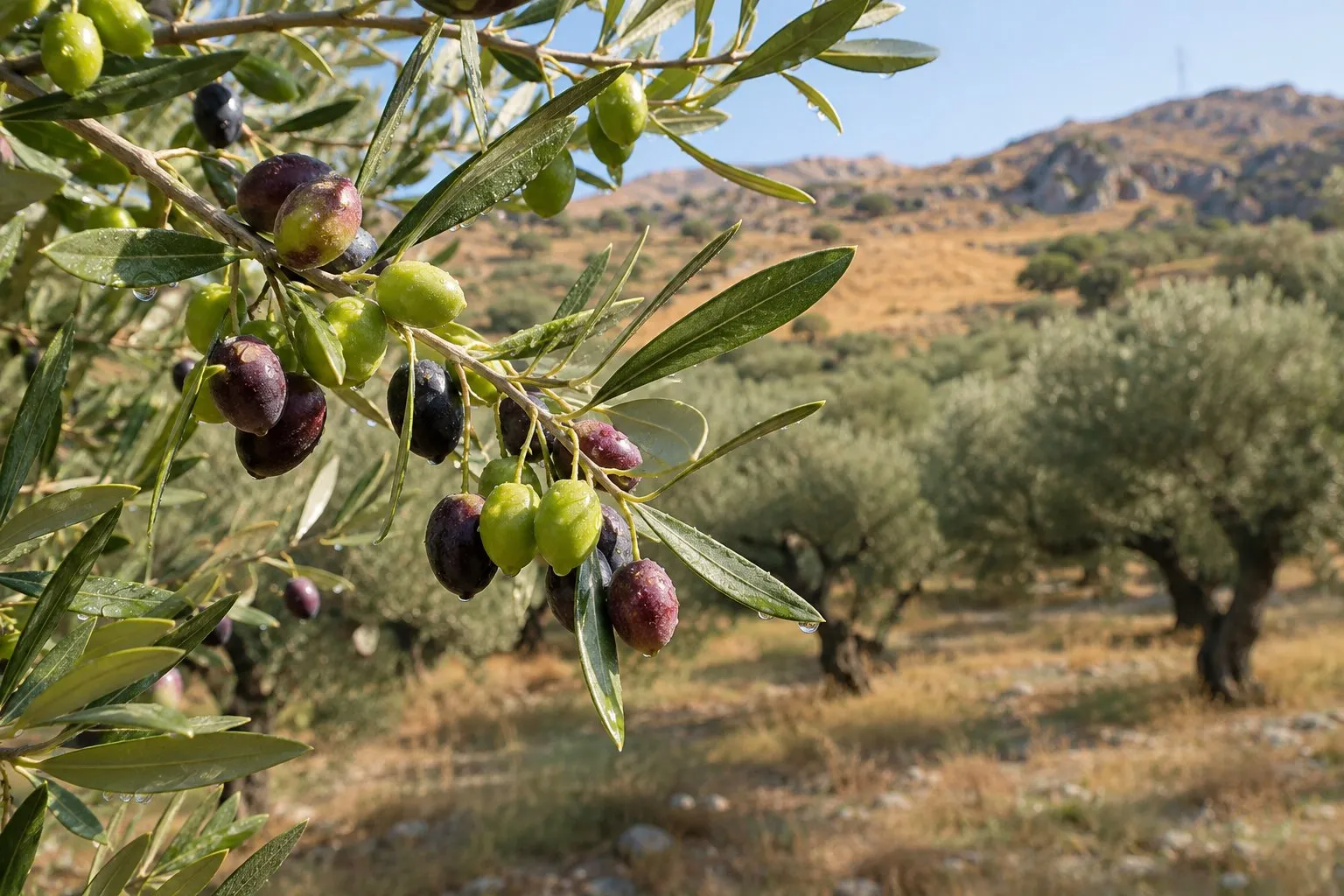
The variety that rules in Crete is the koroneiki, a small olive that gives oils ranging from green to golden. They tend to have aromas of freshly cut grass, green leaf and fruit, with a bitterness and pungency that are more noticeable when the oil is young. Alongside it, other local varieties are grown, such as tsounati.
What “extra virgin” means
In the European Union, “extra virgin olive oil” is a legal category, not an advertising adjective. To carry that name, the oil must:
- be obtained only by mechanical means, without solvents or refining;
- have a free acidity of 0.8% at most;
- pass a sensory analysis with no defects and with some fruitiness.
Below it come virgin olive oil and what is sold simply as “olive oil”, which is a blend of refined and virgin oil. Very low acidity is good, but on its own it doesn’t tell you how the oil tastes or whether it is fresh.
Origin labels: PDO and PGI
Crete has several protected designations of origin (PDO) for oil. Among them are Peza, Archanes, Viannos and Messara, in Heraklion province, and Kolymvari and Apokoronas, in Chania province.
In our province, Lasithi, the reference is the Sitia Lasithiou Kritis PDO, from the far east of the island, made mostly from koroneiki.
In addition, since 2025 there has been a protected geographical indication (PGI) for the whole island, Kriti (Κρήτη), which requires that at least 90% of the olives be koroneiki, tsounati or a blend of the two. In the west there is also an older PGI, Chania Kritis.
On the packaging, the PDO is recognised by the red-and-yellow European seal, and the PGI by the blue-and-yellow one. They guarantee origin, not that it’s the best oil: there are excellent small producers without a seal.
How to read a label
Before buying, look at this:
- The category. It should say “extra virgin olive oil”; in Greek, εξαιρετικό παρθένο ελαιόλαδο.
- The origin. If you’re after Cretan oil, it should say so clearly or carry a PDO or PGI from the island.
- The harvest. Some producers state the harvest year; if it doesn’t appear, look at the best-before date.
- “Cold extraction”. In the EU it can only appear if the oil was obtained below 27 °C, something common today in modern mills.
- The container. Tin or dark glass, which protect against light. Be wary of clear bottles displayed in the sun.
How to taste it
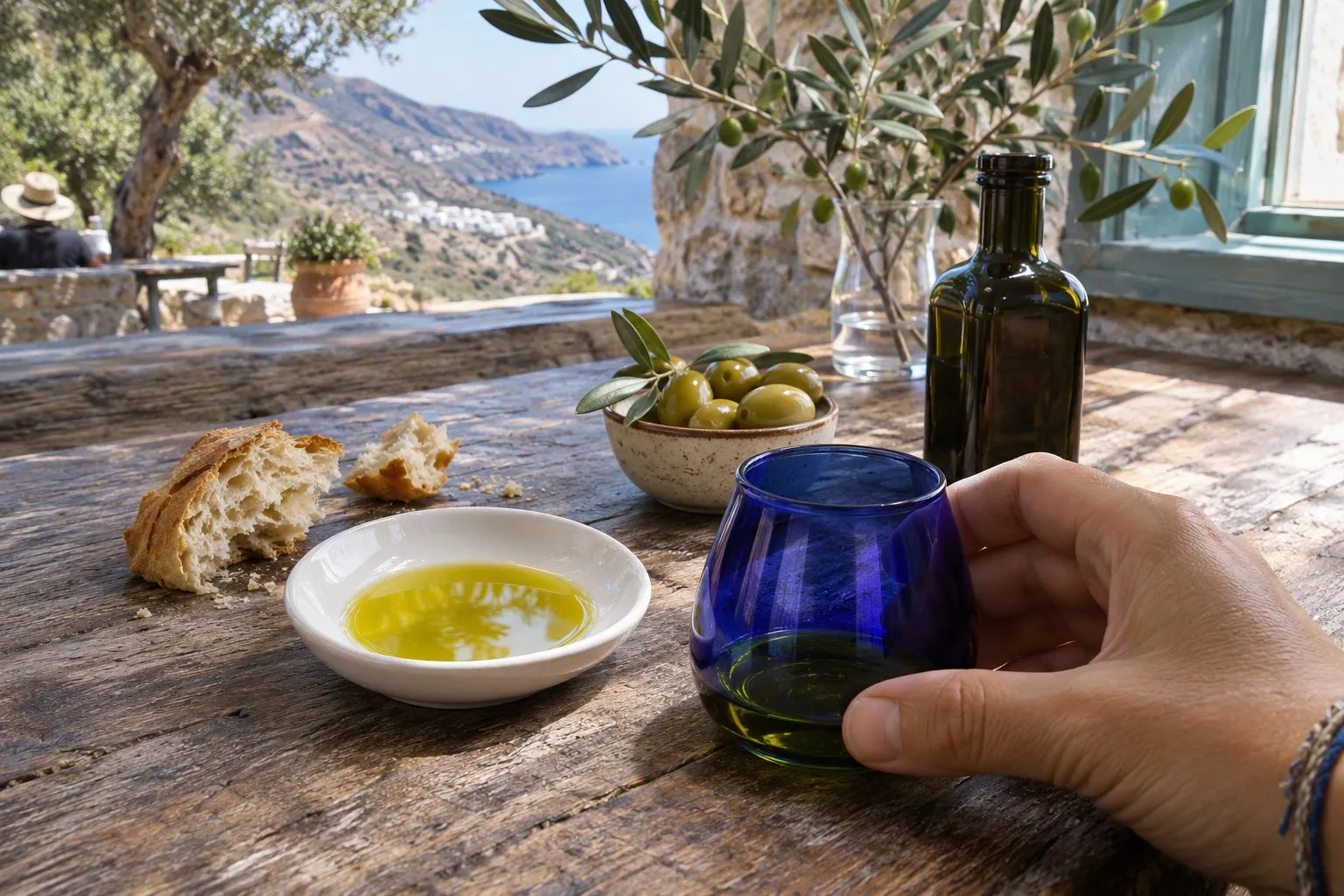
Professional tasters use blue glasses, because colour doesn’t indicate quality. In a shop or at home a small glass is enough:
- Cover it with your hand and warm it for a few seconds so it releases its aromas.
- Smell it. A good extra virgin recalls grass, green leaf, tomato, artichoke or apple.
- Take a small sip and draw in a little air between your teeth to spread it around your mouth.
- Notice the bitterness on the tongue and the pungency in the throat. In a young oil these are positive attributes, not defects.
What shouldn’t appear: a smell of rancid (old or oxidised oil), mould, vinegary wine or fermented olives, the defect tasters call “fusty”.
When the oil is made
The harvest usually starts between late October and November and runs until January, depending on the area, the altitude and the weather. The first olives, still green, yield agourélaio, an early-harvest oil that is very green, intense and produced in limited quantities.
If you travel in autumn or winter, you’ll see nets spread under the olive trees and the mills in full swing. In summer, the shops will have oil from the previous harvest, which, if well stored, is still in good shape.
Where to taste it near Agios Nikolaos
At the taverna
Order a dakos (barley rusk with grated tomato, soft cheese and oil), boiled wild greens (horta) with oil and lemon, or any ladera dish, vegetables braised in oil. It isn’t unusual for the oil on the table to come from the family’s own olive trees, so ask. You’ll find more ideas in our guides on what to eat in Crete and how to choose a taverna.
In local product shops
In the centre of Agios Nikolaos there are shops selling local products, with oils from different parts of the island. In some they let you taste before you buy, which is the best way to choose.
At cooperatives and mills
In the surrounding area, for example towards Kritsa or in the Neápoli area, there are agricultural cooperatives and olive mills that offer guided visits with tastings. Conditions and hours change with the season, so check online or book beforehand. You can combine it with a visit to Kritsa and its surroundings.
Taking it home
The tin is the most robust container and protects the oil from light. In hand luggage the liquids limit applies, so the practical thing is to check it in, well wrapped and inside a sealed bag. Once home, keep it away from heat and light and use it within a few months: oil doesn’t improve with time.
The centre of Agios Nikolaos is about nine minutes’ walk from the pension. Try a couple of different oils before you decide, ask about the harvest and buy the amount you’ll use over the next few months: that way you’ll enjoy it at its best.