What to See in Agios Nikolaos: A Guide for Your First Visit
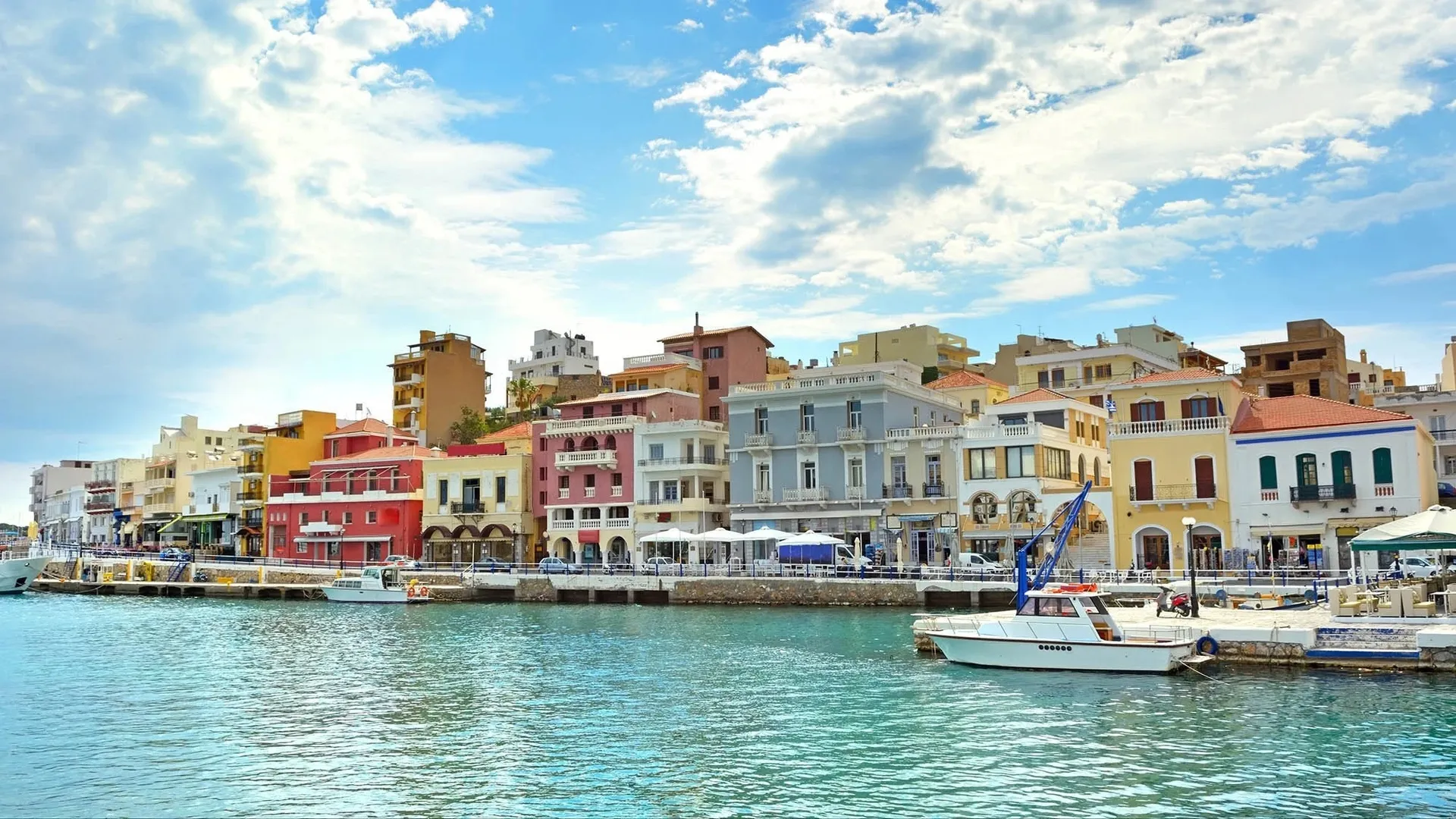
Agios Nikolaos is a small town that is easy to get your head around. Almost everything worth seeing is around the water: a lake right in the centre, a harbour, several city beaches and a promenade that follows the coast. From the pension, in the Mylos area, almost everything in this guide is less than half an hour on foot. We’ll take you through it area by area, in the order you’d walk it on your first day.
Lake Voulismeni
This is the image of the town: an almost perfectly round lake, about 137 metres across, with houses and terraces on one shore and a vegetation-covered rock wall on the other. Since the 19th century a canal has linked it to the harbour, and the fishing boats you’ll see moored at the quay come and go through it.
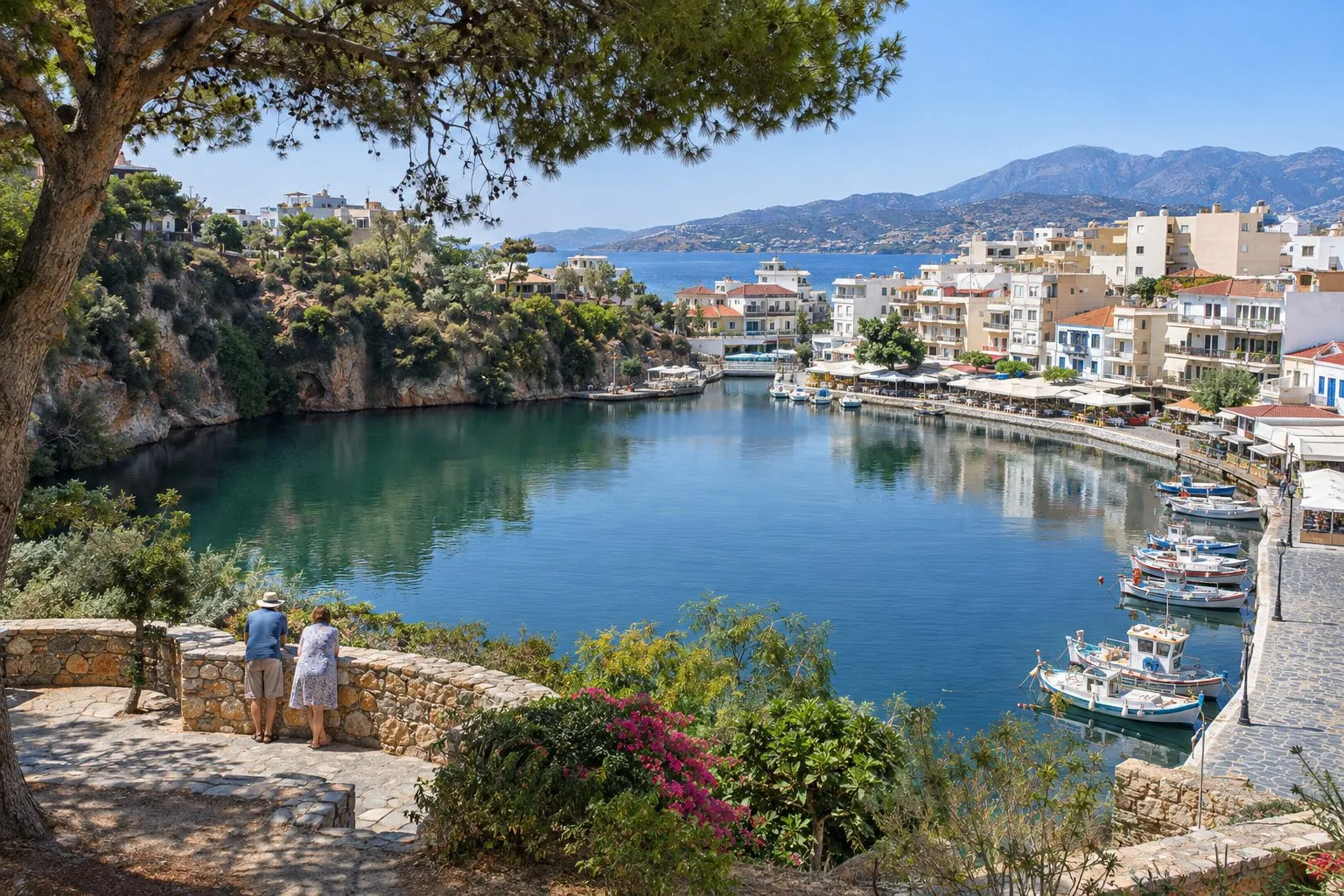
For the best view, climb up to the small park above the lake, on its south side: from up there you can take in the water, the town and the bay at a glance. If you’re curious about its depth and its legends, we’ve dedicated a whole article to it: Lake Voulismeni.
Next to the canal bridge is the Folk Art Museum, a small one with textiles, embroidery and objects from Cretan rural life. It opens seasonally, so check the opening hours before you go.
The Harbour and the Statue of the Rape of Europa
Three minutes from the pension is the harbour, dominated by the sculpture of the Rape of Europa: about four metres of metal depicting the myth in which Zeus, turned into a bull, carried the princess Europa off to Crete. It is one of the most photographed spots in town and a good place to get your bearings. Next to it there is a large free public car park, handy if you arrive by car.
Walks by the Sea
One of the best things about Agios Nikolaos is that you can cover a good part of it without leaving the water’s edge.
- Between the harbour and Kitroplatia. A short walk around the headland, with open views over Mirabello Bay. In a small square by the rocks there is another mythological sculpture: the horn of Amalthea, the goat that, according to the myth, nursed the infant Zeus and whose horn became a symbol of abundance.
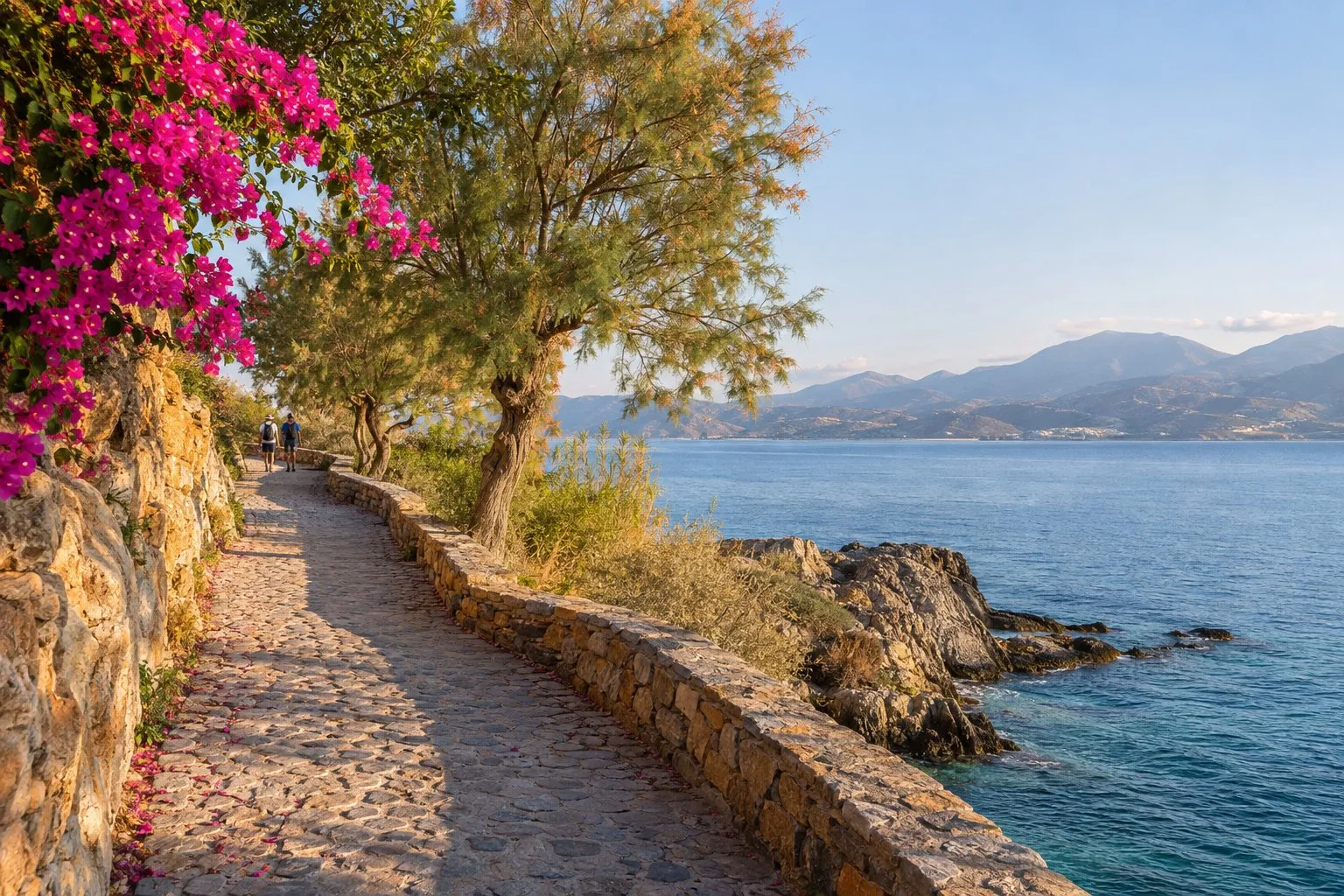
- From Kitroplatia to the marina. A cobbled path by the sea leads south to the marina and Ámmos beach. It’s especially pleasant first thing in the morning, before the heat sets in.
The Town’s Beaches
You don’t need a car to go for a swim. These are the ones within walking distance, with the approximate time from the pension:
- Kitroplatia (1 minute): small, with sand and pebbles, and tavernas around the square. Its name means something like “citron square” and recalls the trade in this citrus fruit, which was shipped from here before the town had a port.
- Ámmos (10 minutes): sandy, with calm waters, next to the marina.
- Ammoudi (18 minutes): a wide sandy cove, north of the centre.
- Almiros (26 minutes): to the south, where the Almiros river reaches the sea.
You’ll find more details on each one in our guide to the beaches of Agios Nikolaos.
The Archaeological Museum
It reopened in recent years after being closed for works for more than a decade, and it is the most interesting visit for the hottest hours or for a rainy day. It brings together finds from eastern Crete from the Neolithic to Roman times, with a strong emphasis on Minoan culture. The best-known piece is the so-called Goddess of Myrtos, a clay figure of a woman holding a jug, about 4,500 years old.
Opening hours change with the season, so check them on the official website or at the ticket office before you go.
The Churches
In the heart of town is the church of Agia Triada (Holy Trinity), which you can see on your way between the lake and the shopping streets.
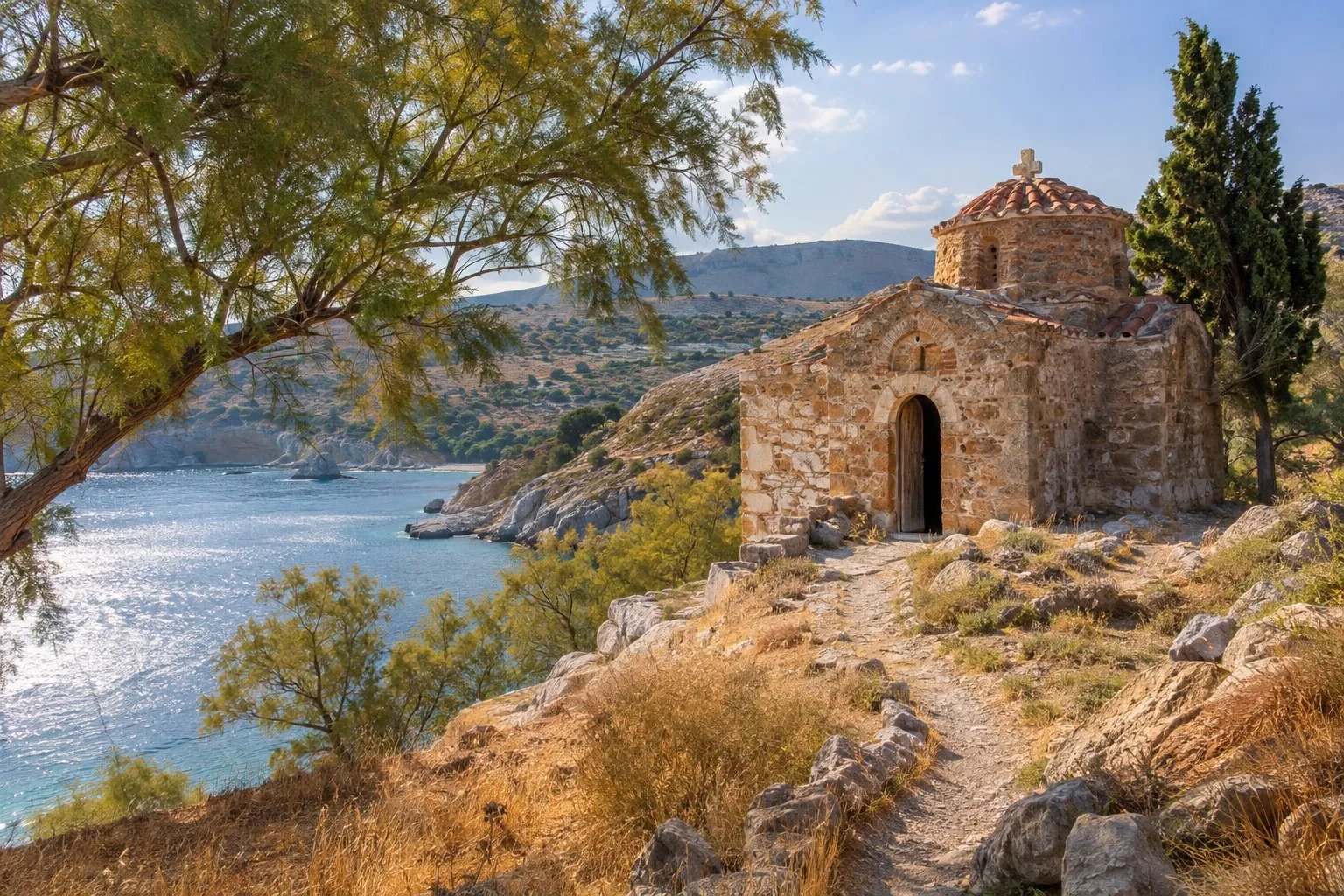
The church that gives the town its name is another one, much smaller and older: the Byzantine church of Agios Nikolaos, on the Nisi headland, beside Katholiko bay, north of the centre, past Ammoudi beach. It is one of the oldest in Crete and preserves remains of geometric and plant decoration, with no figures, typical of the iconoclast period (8th and 9th centuries). After an earthquake in 1303, frescoes of saints were painted over it, and some of them survive.
Today it sits inside a hotel’s grounds and is usually closed. If you’re interested, ask beforehand how and when it can be visited; even if you don’t manage to get in, the walk there, passing through Ammoudi, is worth it in itself.
A Route for Your First Day
If you only have one day to get to know the town, here is a simple way to see it without rushing:
- An early swim at Kitroplatia and a walk along the cobbled path towards the marina.
- Back along the coast to the harbour and the statue of Europa.
- Cross the canal bridge to the lake and climb up to the park to see the town from above.
- The Archaeological Museum in the middle of the day.
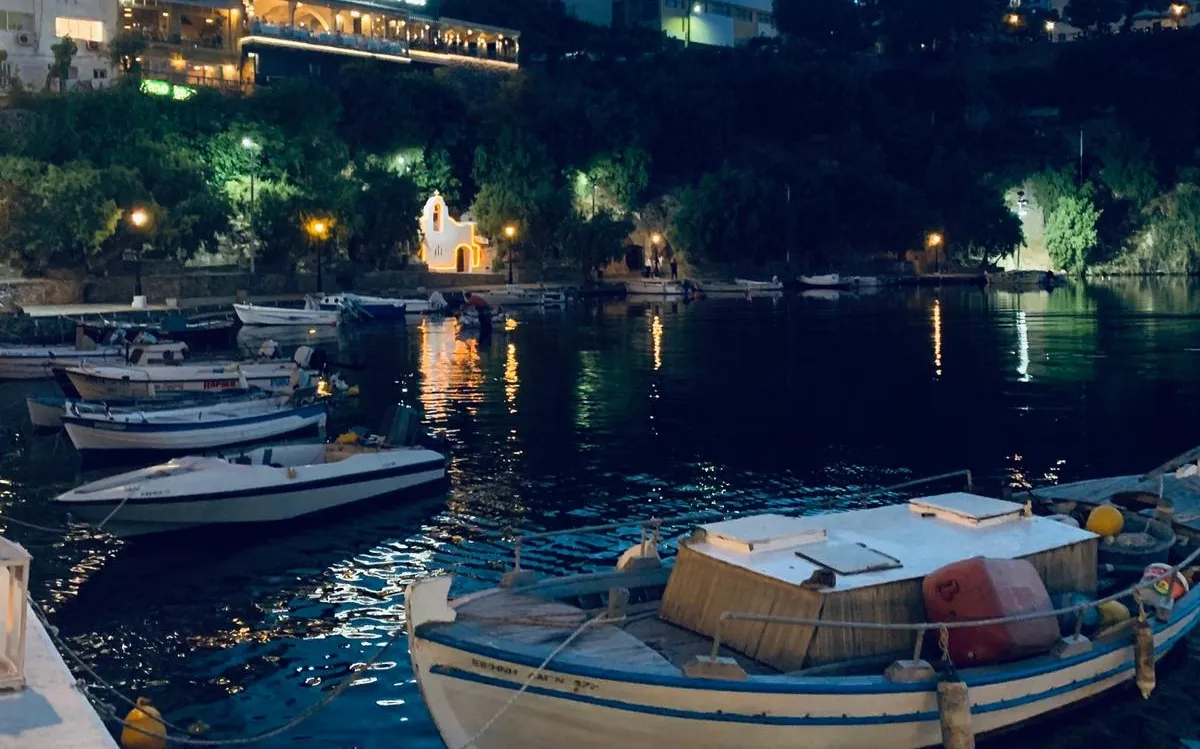
- Towards evening, a terrace by the lake or the harbour. We tell you how to make the most of that time in Agios Nikolaos at night.
If You Have More Days
Agios Nikolaos is a good base for getting to know eastern Crete. Elounda and the island of Spinalonga, with its Venetian fortress, are about 23 minutes away by car; we explain everything in our guide to the trip to Spinalonga.
Before You Set Out
Wear comfortable shoes, because the town is built on hills and there are slopes and steps between the centre and the coast. In summer, plan your day around the heat: beach and walks in the morning, the museum at midday, and back out on the streets when the sun goes down. And if you’re unsure how to get anywhere, just ask us: we’ll point you to the shortest way from our door.