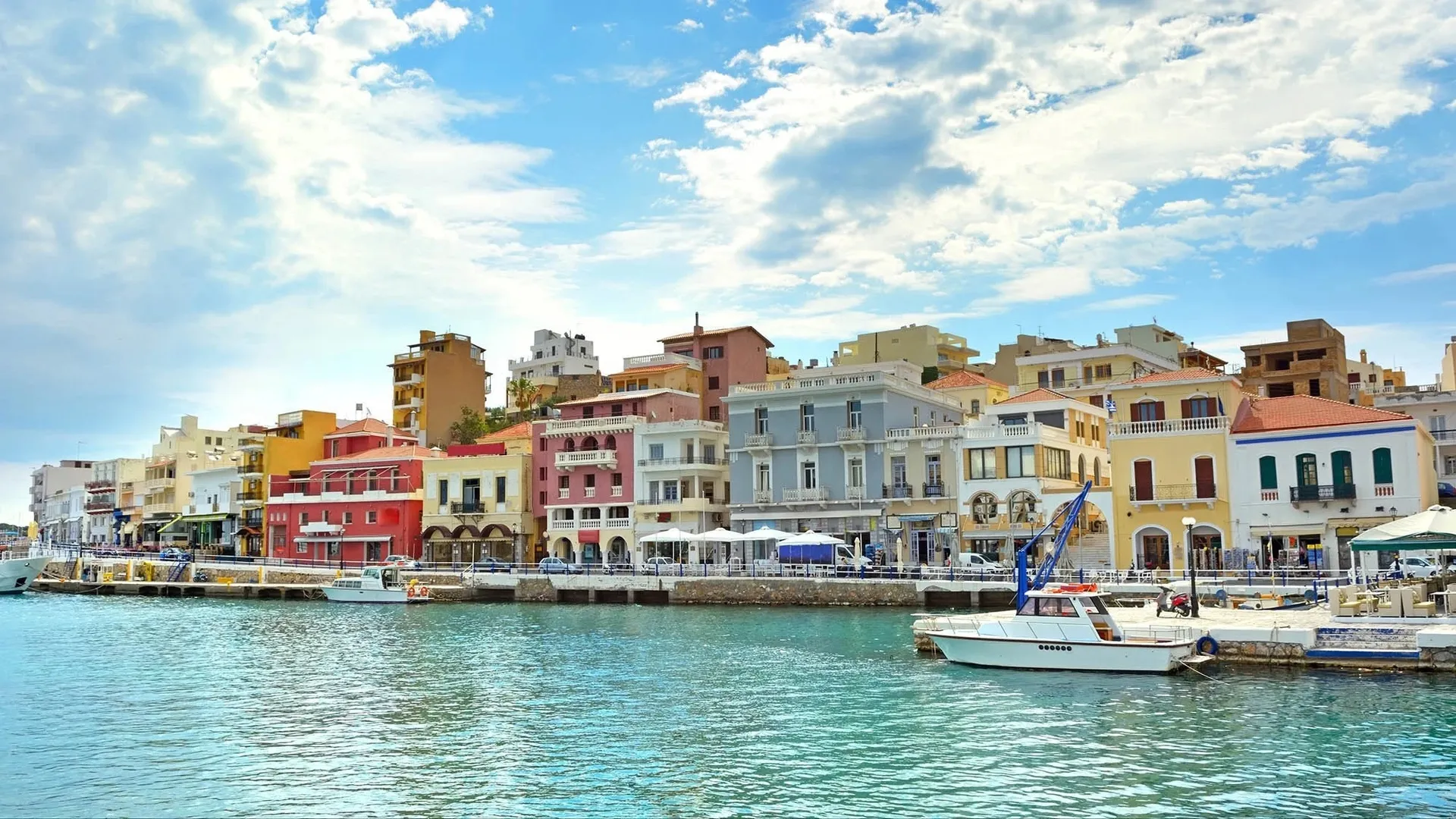
Lake Voulismeni: History, Legends and Corners to Enjoy It
You step out of the pension, walk about six minutes (450 metres) and you’re in the heart of Agios Nikolaos: Lake Voulismeni. Hardly anyone here calls it by its full name; to the people of the town it’s simply “the Límni”, the lake. There is more history behind it than you’d think.
A Lake in the Middle of Town
It is almost round, about 137 metres across. On one shore there are houses, terraces and a quay where the fishing boats tie up; on the other, an almost vertical rock wall covered in vegetation. A narrow canal links it to the harbour, and the sea water flows in and out through it.
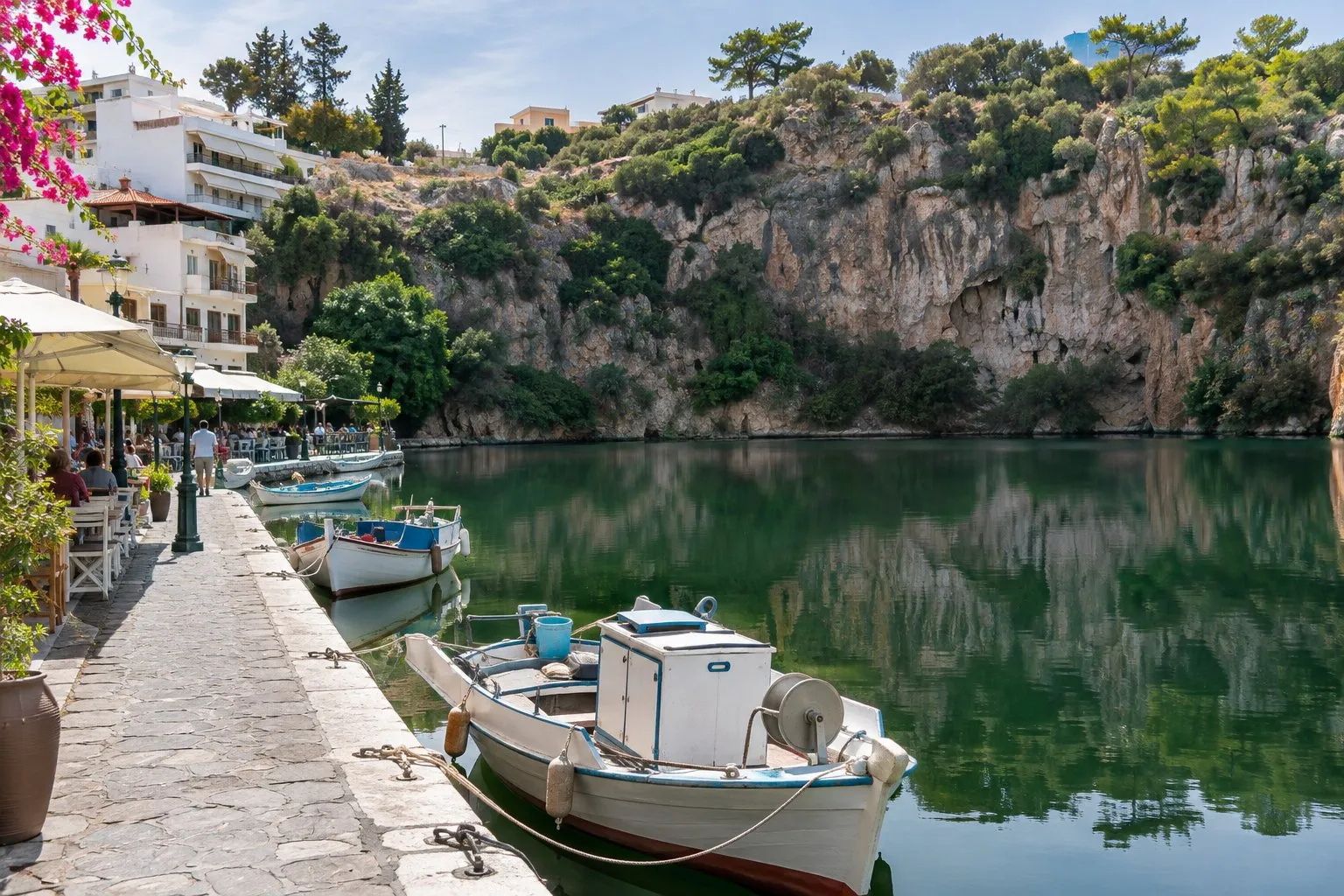
Its origin is geological, not volcanic, although for a long time people believed the opposite. Geologists explain it as a sinkhole: millions of years ago, an underground stream opened a cavity in the limestone, the roof eventually collapsed and the hollow filled with water from a spring. The rock wall you see is, in fact, the scarp of a fault.
How Deep Is It?
The figure you’ll see repeated almost everywhere is 64 metres. It’s the one measured by the British naval officer Thomas Spratt in the mid-19th century, when he was charting the coast of Crete. In the year 2000, an underwater survey commissioned by the University of Athens, the first of its kind, measured a maximum depth of about 49 metres; the difference is attributed to part of the lake wall having broken away.
Whichever figure is right, it’s a lot of depth for such a small lake, and that explains much of what is told about it.
From “Stinking Lake” to Boat Haven
For centuries the lake was fed by a spring and drained into the sea through a small stream. When the spring stopped flowing, the water stagnated and began to smell so bad that people called it Vromolimni, “the stinking lake”.
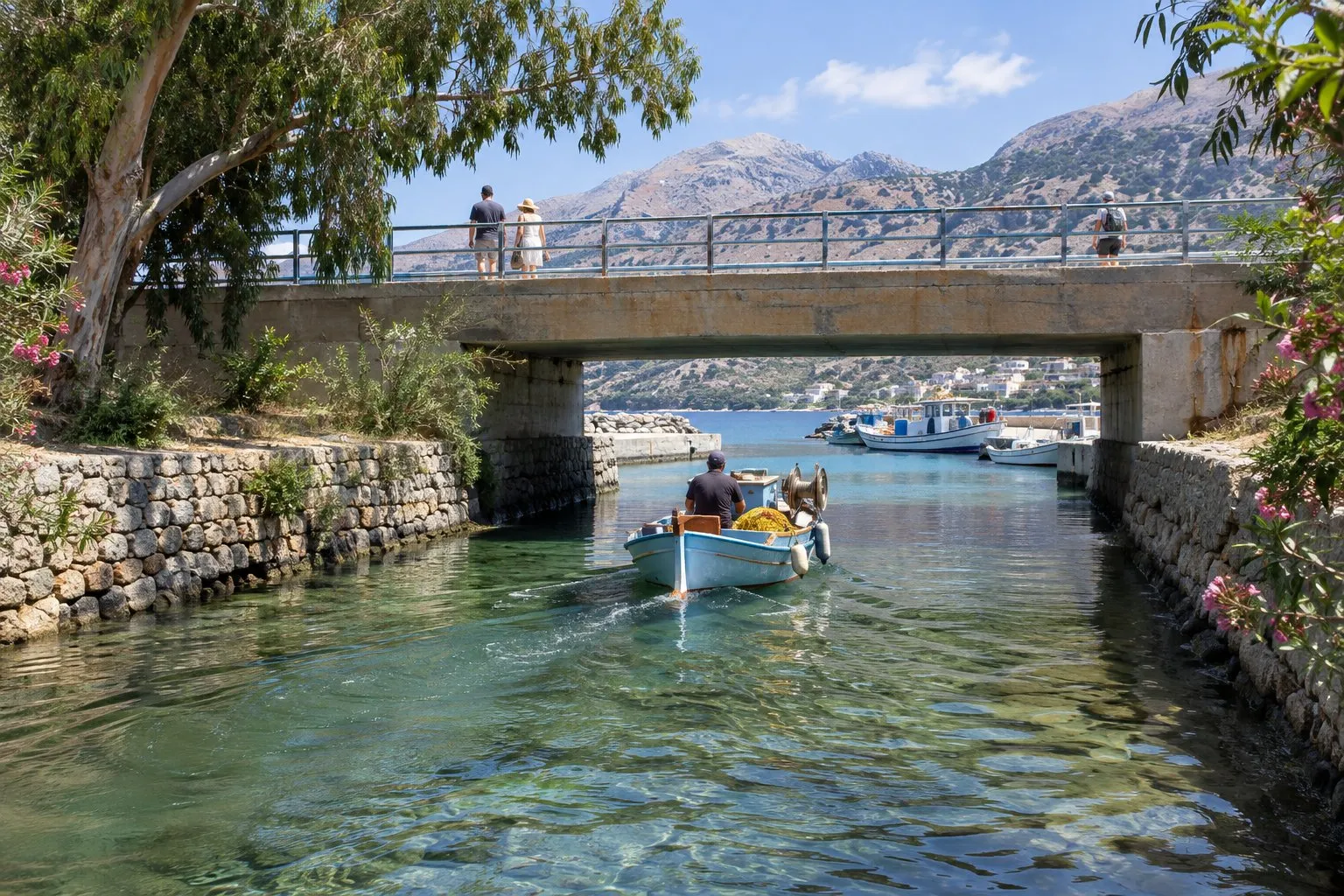
The solution came in the late 1860s, when the Ottoman governor of the area ordered a canal to be opened to the sea to refresh the water. That canal was dredged and widened several times, and in the early 20th century the French army built a wider one. The concrete bridge you cross today to get from the lake to the harbour dates from 1954.
The current name, Voulismeni, is usually translated as “sunken”.
The Legends
A lake this deep, with almost vertical walls and right in the middle of town, was bound to gather stories. These are the ones most often told, and they should be taken for what they are: legends.
- The bottomless lake. For a long time it was believed to have no bottom. The 19th-century measurements and later surveys disprove it, but the reputation has stuck.
- The goddesses’ bath. According to tradition, the goddess Athena bathed in its waters; some versions add Artemis.
- The link with Santorini. It has been said that the lake is the crater of an extinct volcano and that it is connected underground with Santorini. The idea gained strength in 1956, when a strong earthquake in the Aegean, which many then attributed to the volcano, coincided with disturbances in the lake’s water. Geology supports neither claim.
- What lies on the bottom. Another story says that at the end of the Second World War the German army threw weapons and vehicles into the lake. They have never been found.
- Cousteau. The most repeated of all: that not even the oceanographer Jacques Cousteau managed to find the bottom. There are versions to suit every taste (that he dived in, that he ruled it out as too dangerous) and none is well documented. We tell it too, but for what it is: a good story for after the meal.
Corners to Enjoy It
The Terraces on the Shore
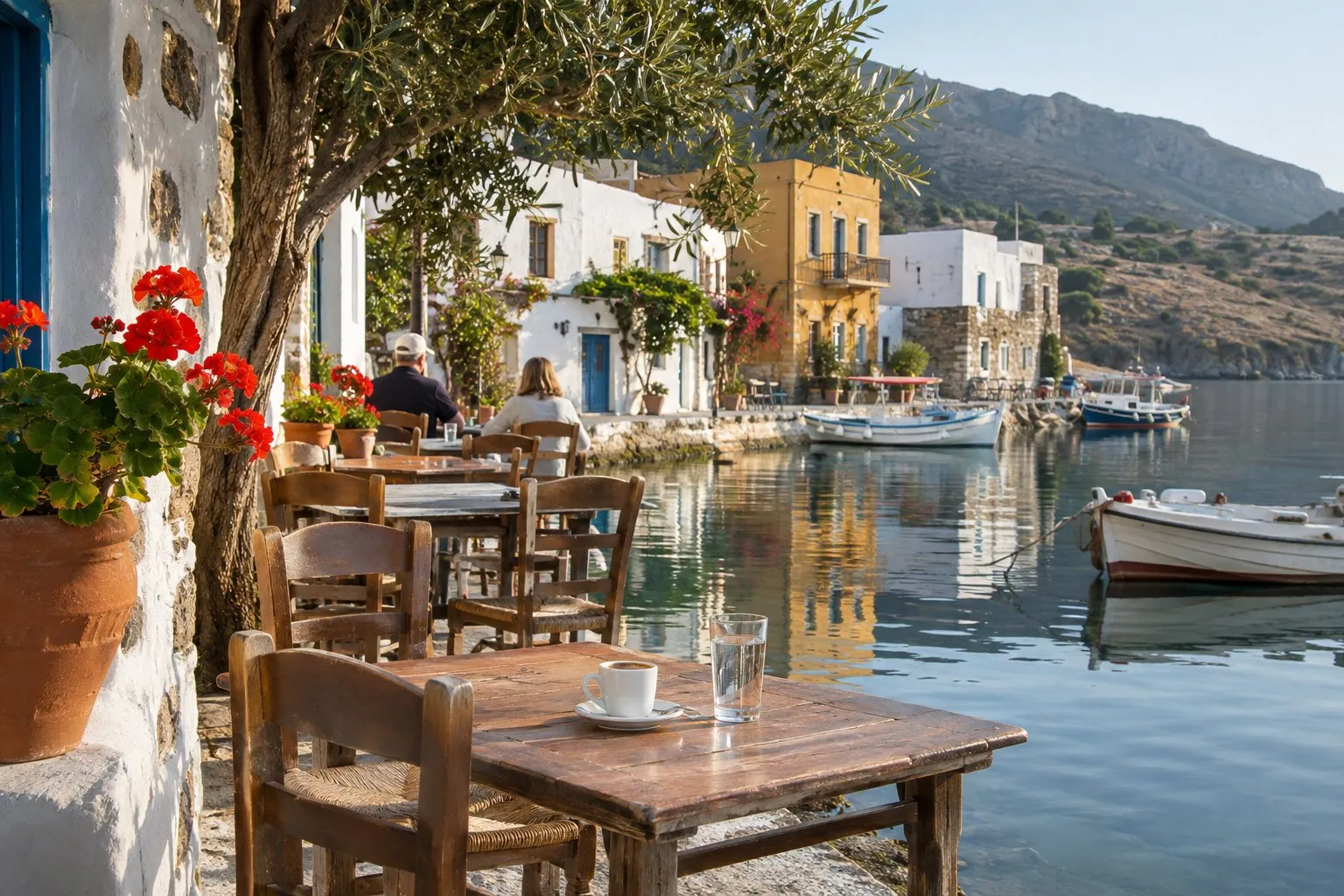
Around the lake there are cafés and restaurants with tables almost at water level. In the morning it’s a good spot for a quiet coffee; in the afternoon and evening, the atmosphere changes completely. If you’re not sure where to sit, our tips for choosing a taverna can help.
The Park Above
On the south side, above the rock wall, there is a small park with a view of the lake, the town and the bay. It’s the classic photo of Agios Nikolaos, and the soft light first thing in the morning or at the end of the afternoon suits it especially well.
The Canal and the Bridge
It’s worth stopping for a moment on the bridge to watch the boats pass between the lake and the harbour. Right next to it is the small Folk Art Museum, with traditional textiles and embroidery; it opens seasonally, so check the hours beforehand. From the lake it’s about three minutes on foot to the harbour and the statue of the Rape of Europa.
At Night
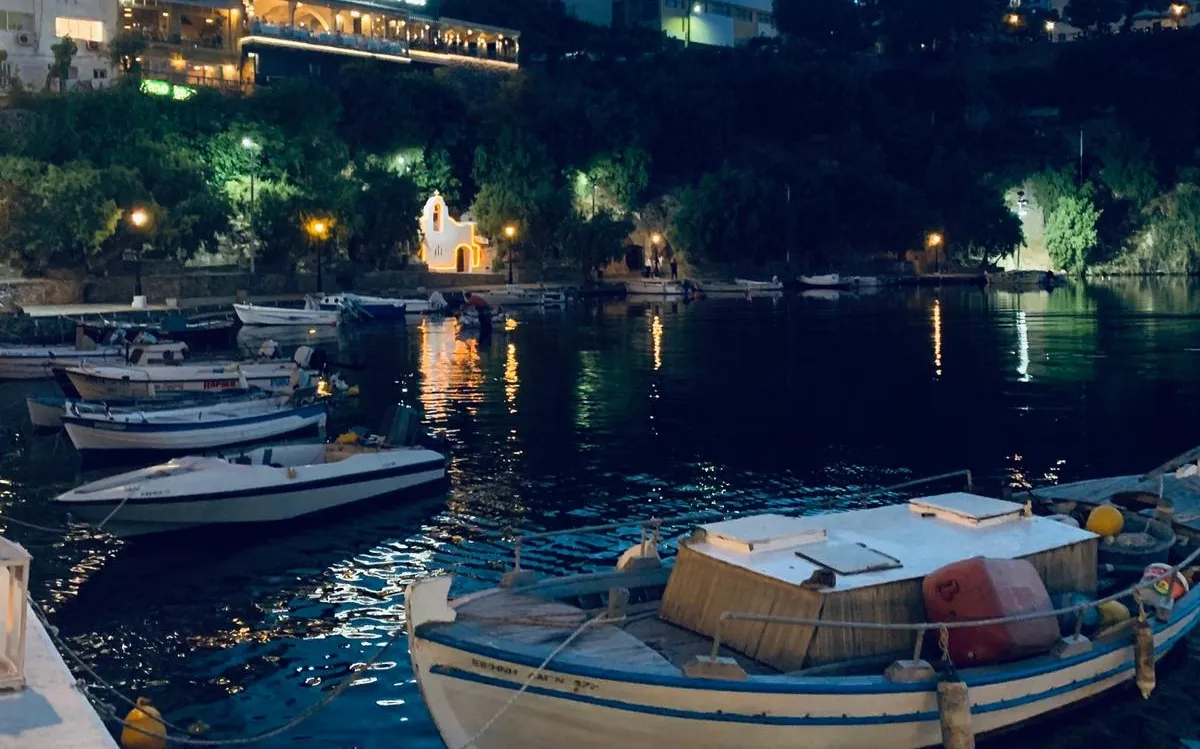
With the lights of the terraces reflected in the water and the boats still beside the quay, the lake becomes another place. We tell you how to make the most of that time in Agios Nikolaos at night.
Easter Night
If you happen to be in Crete for Orthodox Easter, you’ll see a deeply rooted custom here: at midnight on Holy Saturday, after the announcement of the Resurrection, an effigy of Judas is burned on a platform in the middle of the lake, amid fireworks and firecrackers. A good part of the town gathers around the water, so it’s best to arrive early to find a spot. The date changes every year and doesn’t always coincide with Catholic Holy Week.
Practical Tips
- To see it in peace, go early: at that hour there are few people and the light is very good for photos.
- For a swim, Kitroplatia beach is a few minutes on foot, very close to the pension.
- To combine it with other things, the lake fits into any walk: it lies between the harbour and the centre, and it’s easy to link with everything else we suggest in what to see in Agios Nikolaos.
- Mind your footwear if you go up to the park: it sits quite a bit higher than the shore.
The most practical approach is not to set aside one particular moment for it, but to pass by several times during your stay: a coffee in the morning, the view from above one afternoon and a dinner by the water. It’s so close to the pension that it ends up being part of the way to almost anywhere.