Kritsa and Its Surroundings: A Day in Traditional Crete
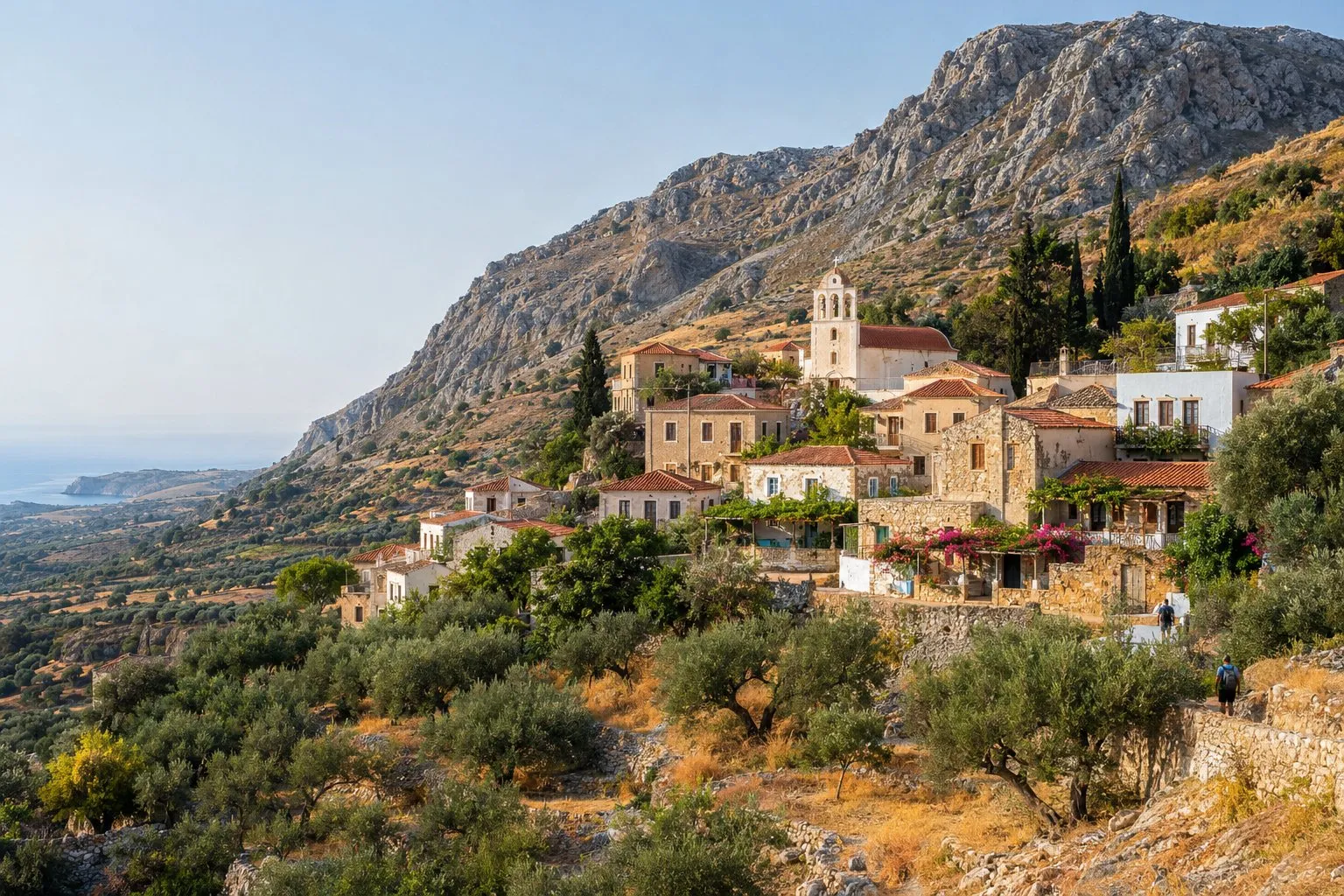
Kritsa is about 10 km from Agios Nikolaos, inland, on the slope of Mount Kastellos at an altitude of about 375 metres. By bus it takes around twenty minutes. It’s a change of scenery without covering many kilometres: olive trees, stone houses and mountains instead of beach. In the area around it there is a Byzantine church with frescoes, an ancient city and a gorge to walk, just enough to fill a day.
Panagia Kera: Byzantine Frescoes
The church of Panagia Kera stands roughly a kilometre before the village, beside the road that climbs up from Agios Nikolaos. It is considered one of the most important Byzantine monuments in Crete.
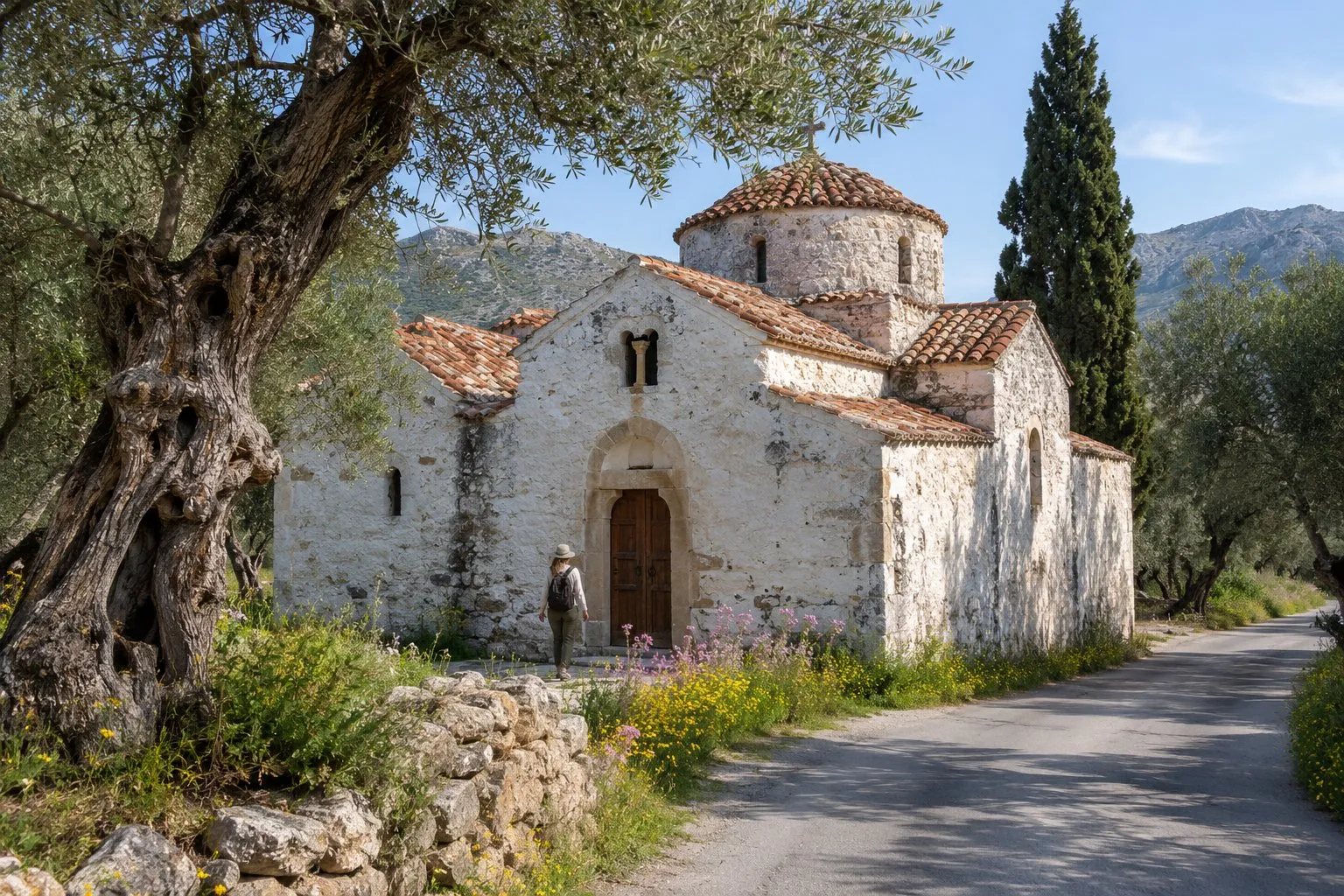
It is a domed church with three aisles, built in phases from the 13th century onwards. The central aisle, the oldest, is dedicated to the Dormition of the Virgin; the south one to Saint Anne, and the north one to Saint Anthony. Inside, the walls are covered with frescoes, mainly from the 13th and 14th centuries, in different styles depending on the aisle.
A few tips for the visit:
- Go first thing. The space is small, and with few people you can look at the frescoes more calmly.
- Entrance fee and opening hours. There is an entrance fee, and the hours change with the season. Check before you go.
- It’s a place of worship. It’s best to wear suitable clothing and speak quietly.
The Village of Kritsa
Kritsa is one of the villages with the most history in eastern Crete. The best thing is to leave the car in the public car park and walk up, because the streets are narrow and steep. You’ll find stone houses, courtyards with geraniums and small churches that appear as you turn a corner.
The village is known for its textiles and embroidery. On the main street there are workshops and shops with tablecloths, doilies and other handmade pieces with patterns that have been passed down from generation to generation. If you’re interested in buying something, ask who made it and where. There is a bit of everything, and what is handmade shows in the detail and in the price. We give you more ideas in what to buy in Agios Nikolaos.
According to local tradition, the people of Kritsa are descended from the inhabitants of the nearby ancient city of Lato.
Lato, the Doric City
About 3 km north of Kritsa, along a signposted road, are the ruins of Lato, one of the important Doric cities on the island. What you see today dates mostly from the 5th and 4th centuries BC.
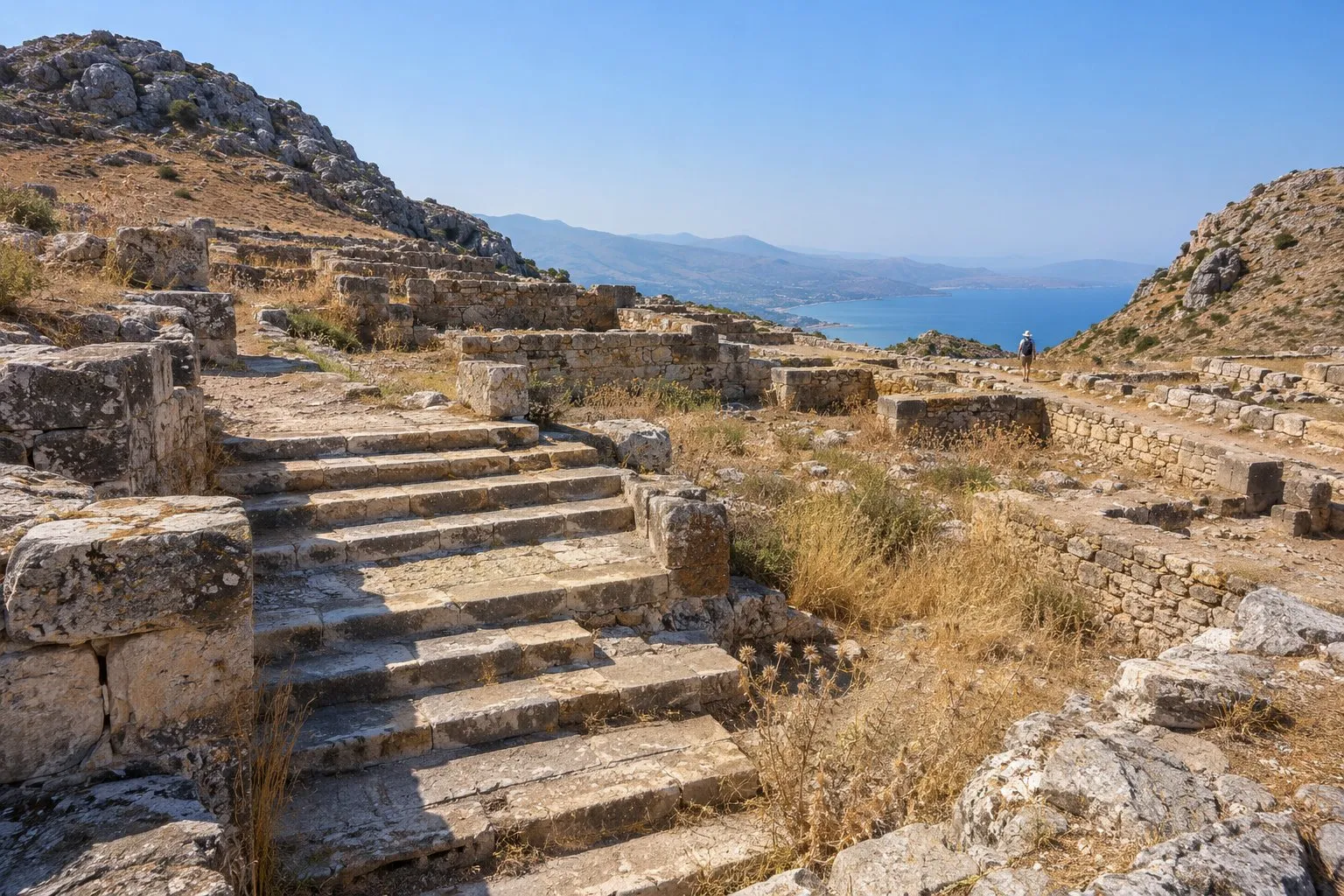
The city was built in a spot that was easy to defend, on the saddle between two hills that served as an acropolis. From the main gate you climb among the remains of shops and houses to the centre of the city, where you can recognise:
- the agora, with its cistern and a small sanctuary;
- the prytaneion, the city’s governing building;
- a stepped area, probably for meetings and public events.
From the top you can see Mirabello Bay. Its port, Lato pros Kamara, was near what is now Agios Nikolaos. Only part of the site has been excavated.
There is very little shade and the ground is stony, so bring water, a cap and good footwear, and in summer try to go early. Opening hours and entrance fee change with the season.
Kritsa Gorge
If you like walking, Kritsa Gorge is a short and pretty route. It is about 4 km long, starts near the village’s old stone bridge and ends near the village of Tapes. In some stretches it narrows to a metre and a half, between high walls that give shade.
- Difficulty. It’s an easy route, although at some points you have to scramble over large rocks. Allow about two and a half hours.
- Season. Spring is the best time, with flowers and some water. After heavy rain, pools can form that block the way, so avoid it on those days.
- Getting back. The route is not a loop. Before you start, decide how you’re going to return: the same way or with someone picking you up.
- Equipment. Bring hiking boots or trainers and enough water, and let someone know your route.
If You Have Time to Spare: The Katharo Plateau
From Kritsa, a paved road climbs about 16 km to the Katharo Plateau, at about 1,100–1,200 metres above sea level. Up there it’s cooler, there are trails to walk and the view over the coast changes completely. The track that continues towards the Lasithi Plateau is dirt and in poor condition, suitable only for high-clearance vehicles. If you want to see Lasithi, it’s better to go by road, as we explain in the Lasithi Plateau.
Near Kritsa is also Kroustas, another quiet village with a reputation for its traditional tavernas.
A Possible Day
- First thing: Panagia Kera.
- Mid-morning: Lato, before the heat builds.
- Midday: a stroll around Kritsa and lunch in the village or in Kroustas. To choose, see how to choose a taverna.
- Afternoon: textile shops, or a drive up to Katharo if you still feel like it.
If you’d rather do the gorge, swap it in for Lato and start walking early. And if you only have half a morning, Panagia Kera and the village fit in easily. In half-day driving routes you’ll find other ideas near Agios Nikolaos.
Before you set out, check the opening hours of Panagia Kera, of Lato and of the buses, because they change with the season. Bring water and comfortable footwear, and expect almost everything in Kritsa to be done on foot and uphill.