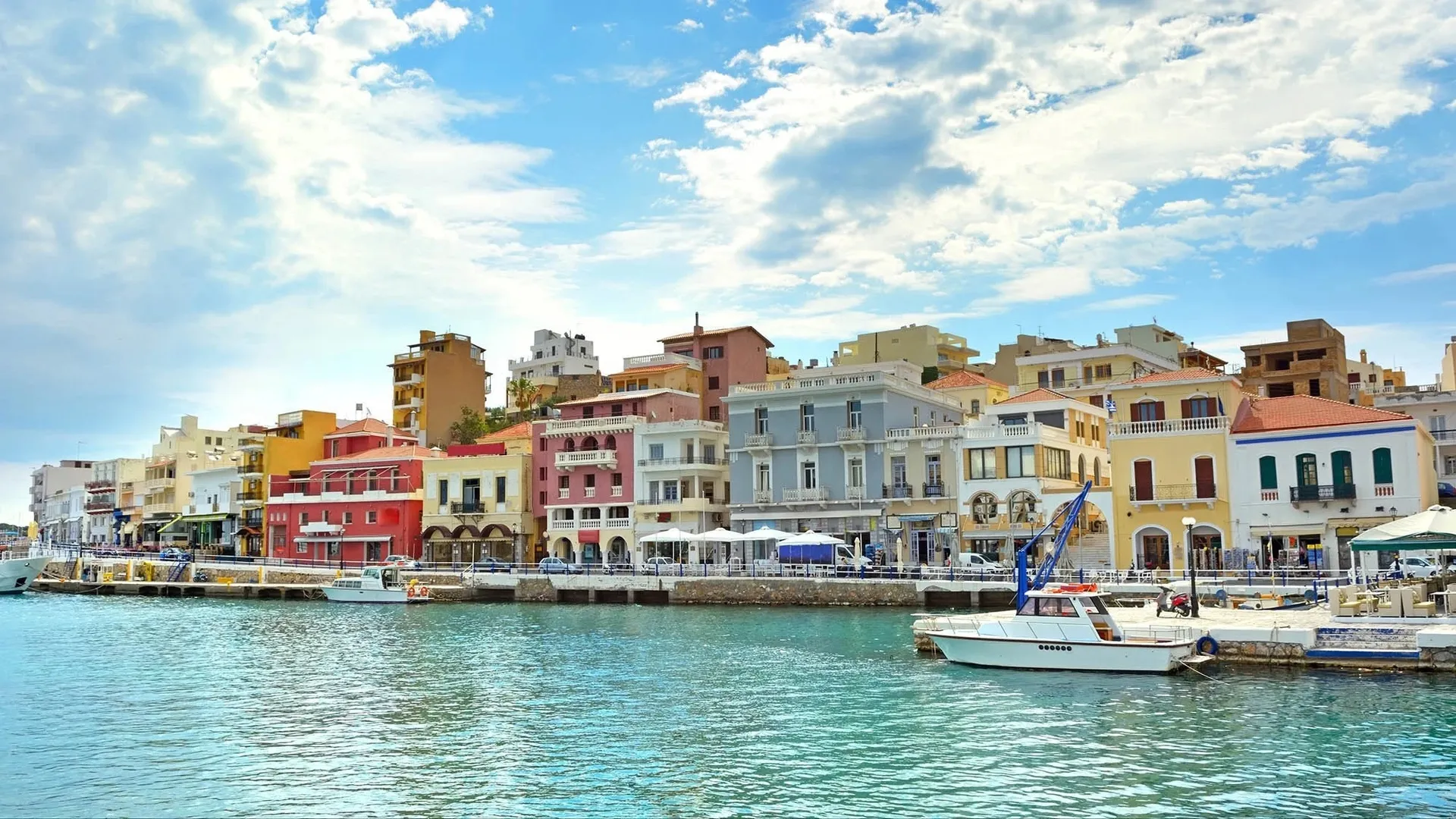
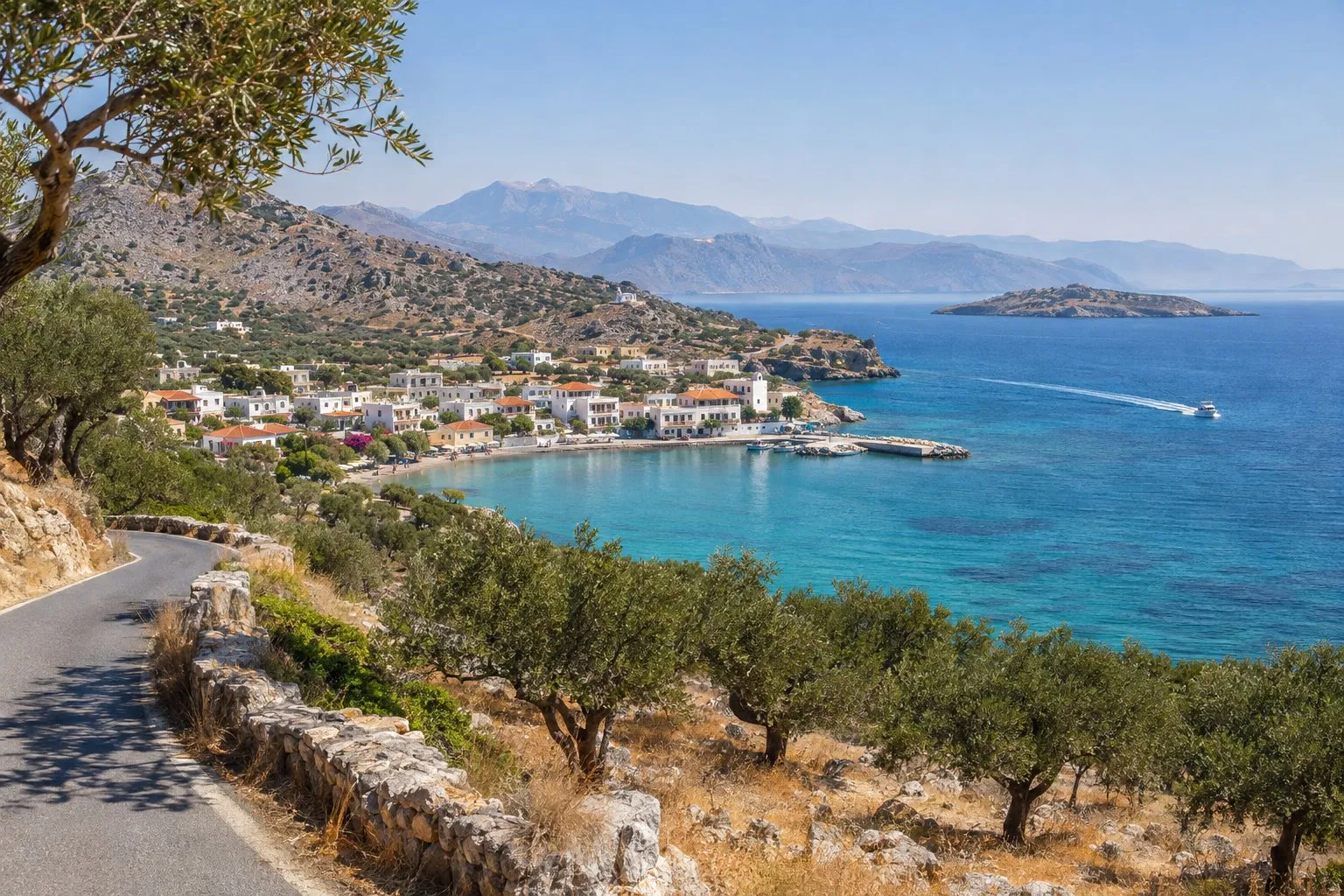
Sitia and the Vai palm grove: a route through the far east of Crete
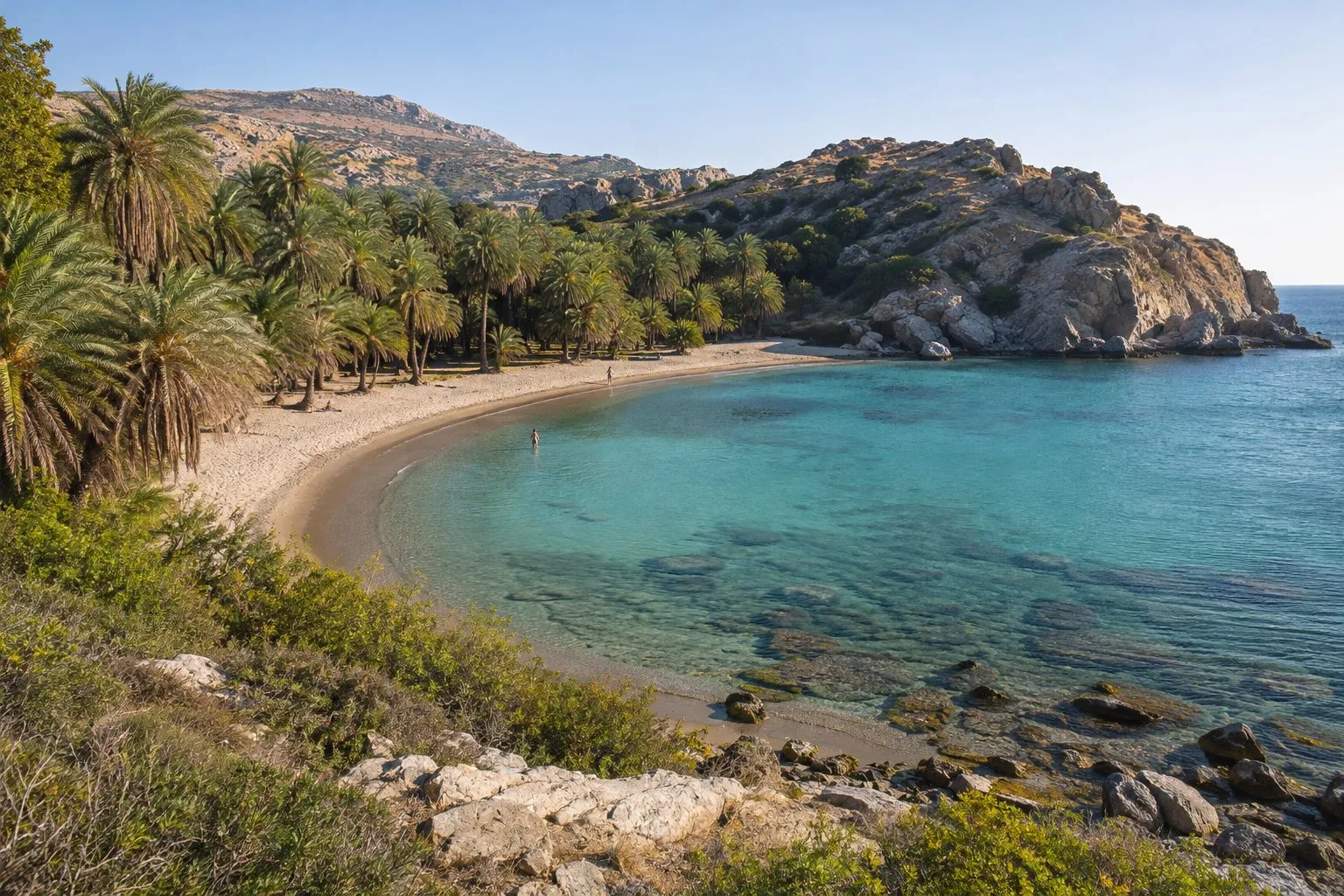
The far east of Crete is quieter and less visited than the rest of the north coast. In a single day you can see Sitia, an unhurried port town; the fortified Toplou Monastery; and Vai, a sandy beach with one of the few natural palm groves in Europe. From Agios Nikolaos it’s a full-day excursion, and it’s worth planning it that way.
Planning the day
Distances and times
- Agios Nikolaos – Sitia: about 65-70 km, a little over an hour by car (allow roughly 1 h 15 min).
- Sitia – Toplou: about 15 km, around 20 minutes.
- Toplou – Vai: about 8 km more.
- Total to Vai: about 90 km, between 1 h 45 min and 2 hours without stops.
The national road skirts Mirabello Bay and, from Kavousi, climbs into the hills with quite a few bends. It’s not difficult, but you move more slowly than it looks on the map. Set off early.
By car or by bus
There are buses from Agios Nikolaos to Sitia, and in season there is usually some connection from Sitia towards Vai, but with few departures. To see all three stops in one day, the car is the practical choice.
In what order
- In summer, go straight to Vai first thing, before the beach fills up, and stop at Toplou and Sitia on the way back.
- Out of season, when the beach matters less, start in Sitia and finish at Vai.
- To avoid retracing your route, you can go via Toplou and come back via Palekastro, which is a few kilometres from Vai.
In any case, check the opening hours of the museum, the fortress and the monastery beforehand, because they change with the season.
Sitia: harbour, museum and fortress
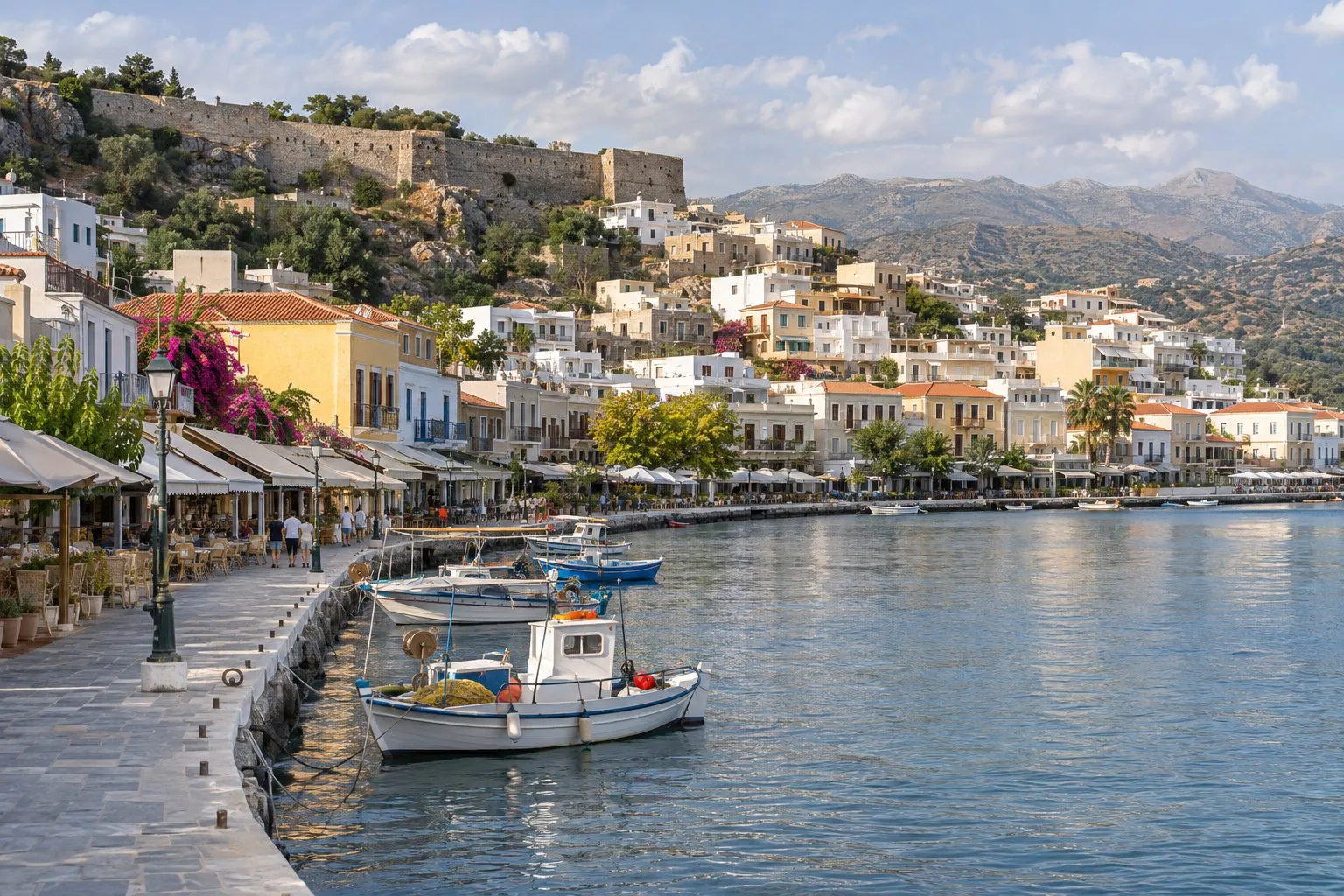
Sitia spreads across a hillside above its bay, with a long seafront promenade, cafés facing the water and fishing boats in the harbour. It has a more relaxed pace than Agios Nikolaos and is a good place for a coffee or for lunch.
The Archaeological Museum
It’s at the entrance to the town, on the road coming from Ierapetra, and brings together finds from sites in eastern Crete. Its best-known piece is the Palekastro kouros, a Minoan statuette about half a metre tall made of ivory with gold details, reconstructed from many fragments.
The Kazarma fortress
Above the town stand the walls of the Kazarma, a Venetian fortification whose name comes from the Italian casa di arma. It has been rebuilt several times and today it is mostly the ramparts that remain. It’s worth climbing up for the views over the rooftops and the bay. In summer it hosts open-air cultural events. There is little shade, so it’s best to avoid the middle of the day.
The Sitia area also has its own protected designation of origin for olive oil. If you’re interested, we write about it in Cretan olive oil.
Toplou Monastery
Between Sitia and Vai, in a dry, open landscape, you come upon Toplou, a monastery that looks like a small fortress, surrounded by high walls, with a bell tower that can be seen from afar. The most widely accepted explanation of its name is that it comes from the Turkish word top, cannon, after one that was once mounted over the entrance.
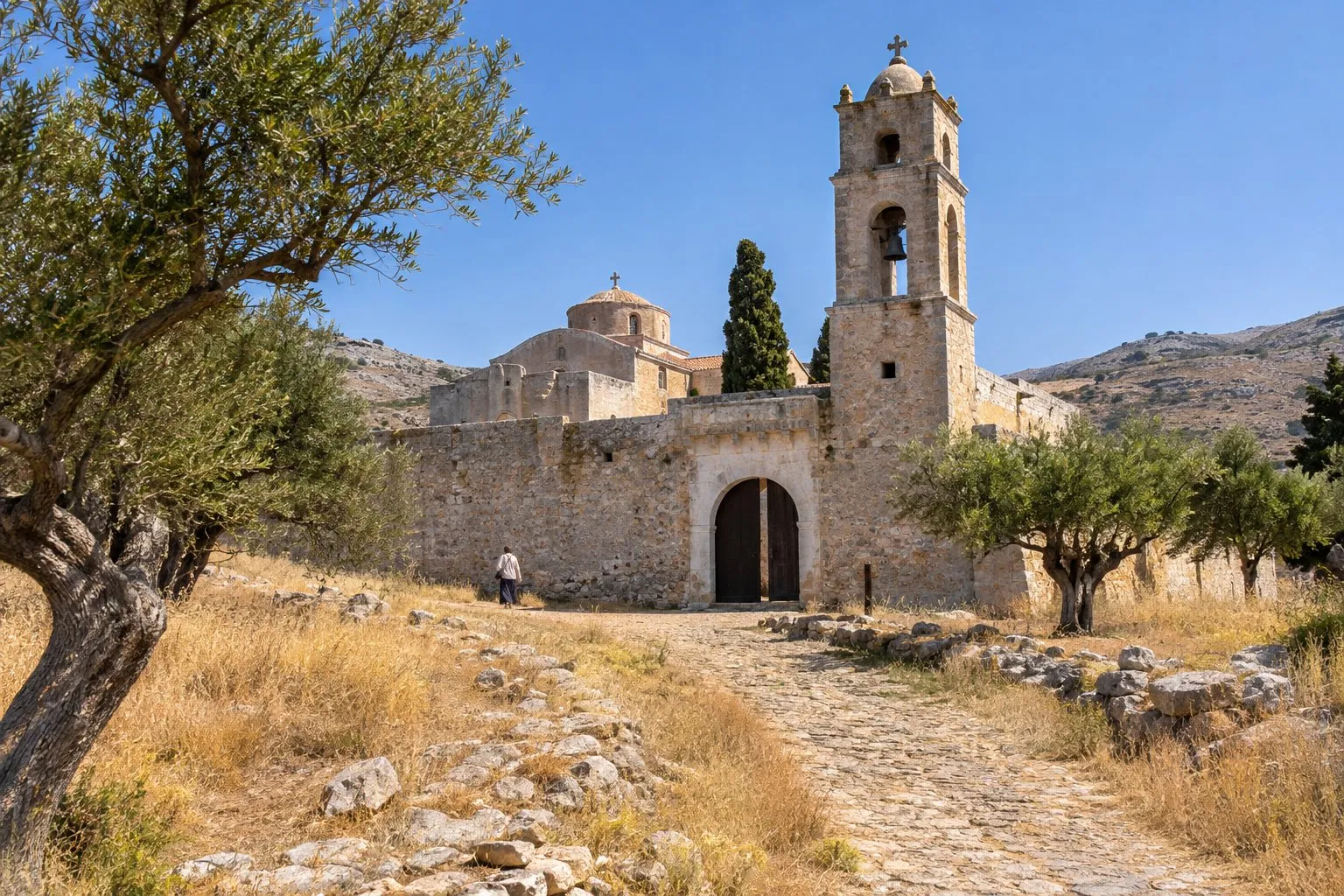
Its origins date to around the 14th century. It was plundered by pirates, brought down by an earthquake in 1612 and rebuilt, and it played a part in the Cretan revolts and in the resistance during the Second World War.
- The icon “Great Art Thou, O Lord”. Painted by Ioannis Kornaros in 1770, it brings together dozens of small scenes on a single panel.
- The museum. It displays icons, engravings and documents.
- Wine and oil. The monastery farms its land and produces wine, raki and olive oil under its own brand. We talk about the island’s wines in Cretan wines and raki.
It’s a working monastery: keep your shoulders and knees covered. Photography is not allowed inside the church or the museum.
Vai: the palm grove and the beach
The palm trees
The palms at Vai are Phoenix theophrasti, the Cretan or Theophrastus palm. It is a species native to just a few places in the eastern Mediterranean (Crete, a few other Greek islands and southwest Turkey), and for a long time they were thought to be simply feral date palms. It was not described as a species in its own right until 1967.
Several legends circulate about their origin: some say the palms grew from date stones left by Arab pirates, others speak of Phoenician sailors. They are just that, legends. For botanists, it is a species that has grown on the island since ancient times.
The palm grove covers about 20 hectares, with several thousand trees. Before it was protected, the area was used for free camping and suffered considerably. Since the 1980s it has been protected and fenced off, and overnight stays and camping are not allowed. You walk it along the marked paths, without going in among the palms.
The beach
In front of the palm grove is a sandy beach with clear water and, in season, sunbeds and parasols. In July and August it fills up by midday. It’s best to arrive early or late in the afternoon. Parking next to the beach is paid.
- The viewpoint. A short path climbs from the beach to a viewpoint with the classic view of the palm grove. It’s steep and has no railings: wear suitable footwear.
- A bit more calm. The paths around it lead to a smaller, less crowded cove.
- Itanos. A few kilometres to the north are the remains of the ancient city of Itanos, next to other small beaches.
Practical tips
- Bring water, a hat and sun protection: there is little shade at the Kazarma, at Toplou and at the Vai viewpoint.
- Out of season the beach services may not be operating, but the palm grove is still worth the visit.
- If you want to break up the trip, on the way out or the way back you can stop at Mochlos, about 6 km from the main road.
- If you’ll be spending a week in the area, this route fits well into our seven-day plan for eastern Crete.
Allow about four hours of driving there and back, so set off early and don’t try to squeeze anything else into that day. And bring a swimsuit even if you don’t plan to swim.