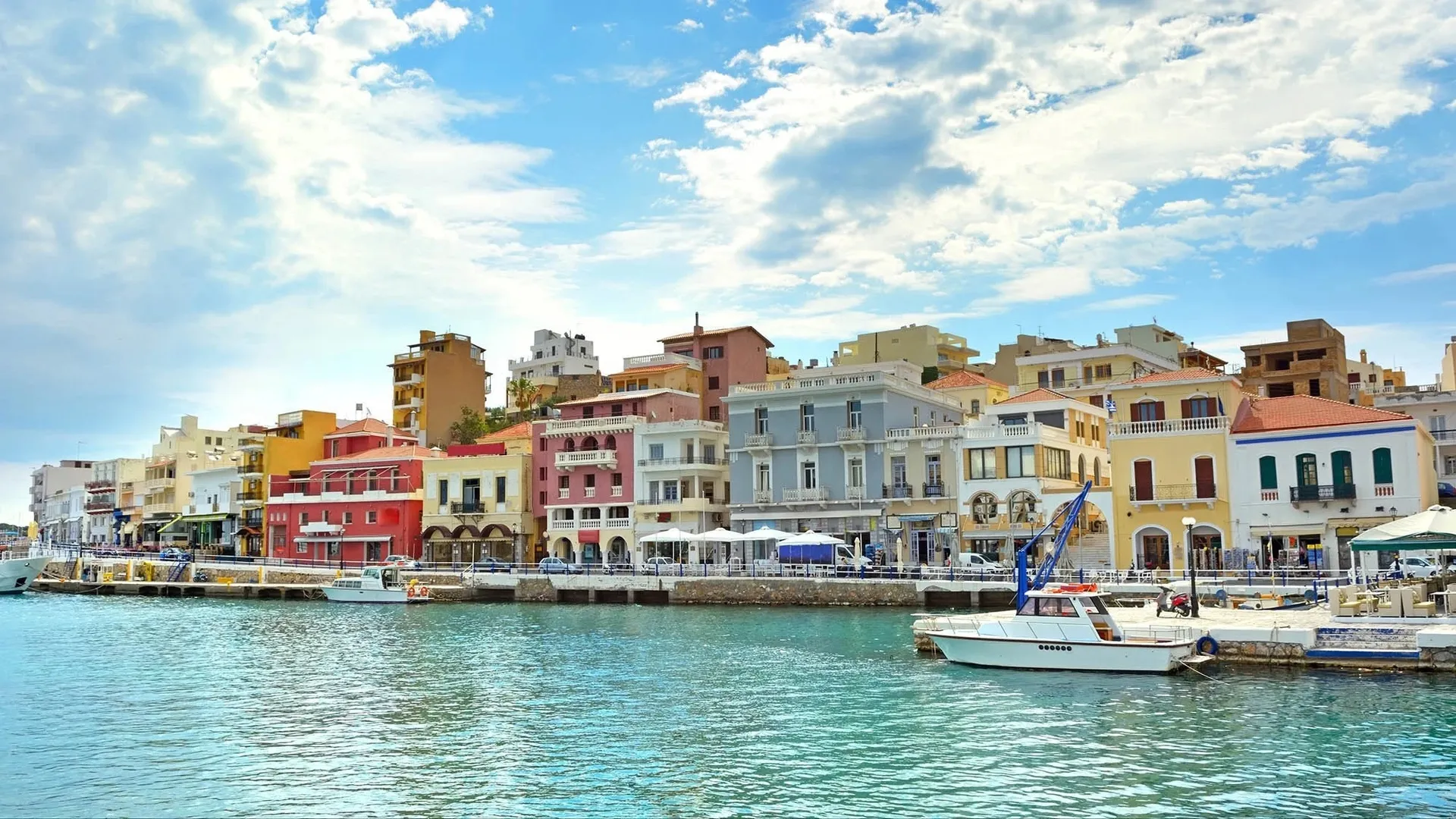
Cretan wines and raki: an introduction to the local tradition
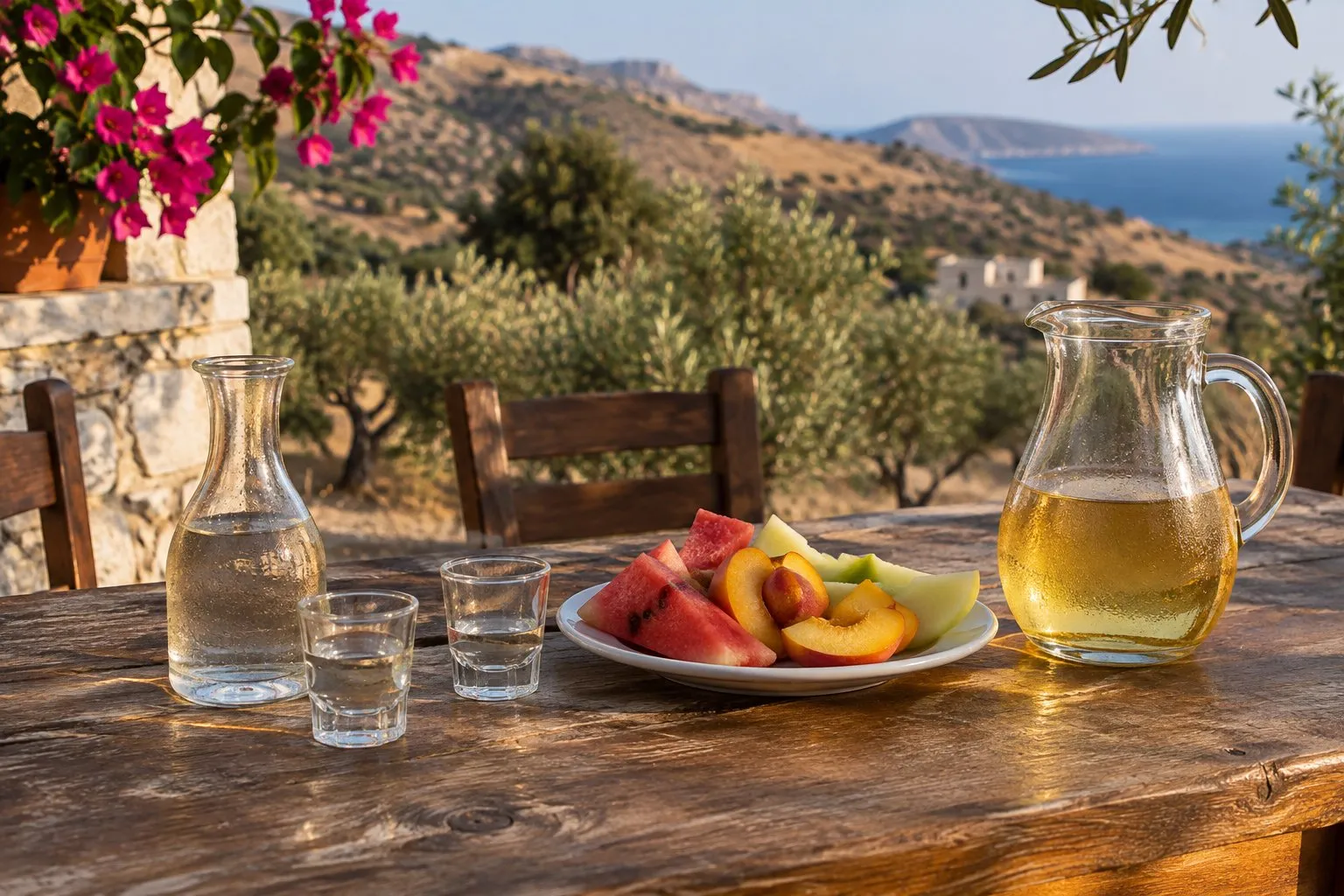
In Crete almost every meal ends with a little glass of raki, and almost every taverna has its house wine. Behind both there is a long tradition that is little known outside the island. This is a simple introduction so that you know what you’re drinking and how to enjoy it sensibly.
Raki: what exactly it is
Cretan raki, which in much of the island is also called tsikoudia, is a grape pomace spirit. It’s made from what is left after pressing grapes for wine, mainly skins and seeds. This mass is left to ferment for a few weeks in closed barrels and then distilled once in a copper still.
The closest equivalent is grappa or Spanish orujo. It contains no aniseed, so it has nothing to do with Greek ouzo or Turkish rakı, even though it shares its name with the latter. In eastern Crete, where we are, it’s normally called raki.
It’s a high-strength drink. Bottled raki usually runs at around 37-40% ABV, and homemade raki can be quite a bit stronger, because each producer makes it in their own way.
A gesture of hospitality
In Crete raki is, above all, a way of welcoming. It’s usual that, at the end of the meal, the house treats you to a small carafe of well-chilled raki, often with fruit or something sweet. It’s also offered in village cafés (kafenía) and in homes when a visitor arrives.
It’s drunk from small glasses, in sips and with a toast: yamas!, which means roughly “to our health”. In winter you’ll also easily find rakómelo, warmed raki with honey and, sometimes, spices.
Accepting is a courtesy, but nobody is offended if you only taste it or prefer not to drink.
Kazanémata: the still season
After the grape harvest comes the time for distilling. Between late October and November, and in some places until December, the village stills (kazania) start up. Today distilling can only be done in licensed stills, and each village usually has one or two.
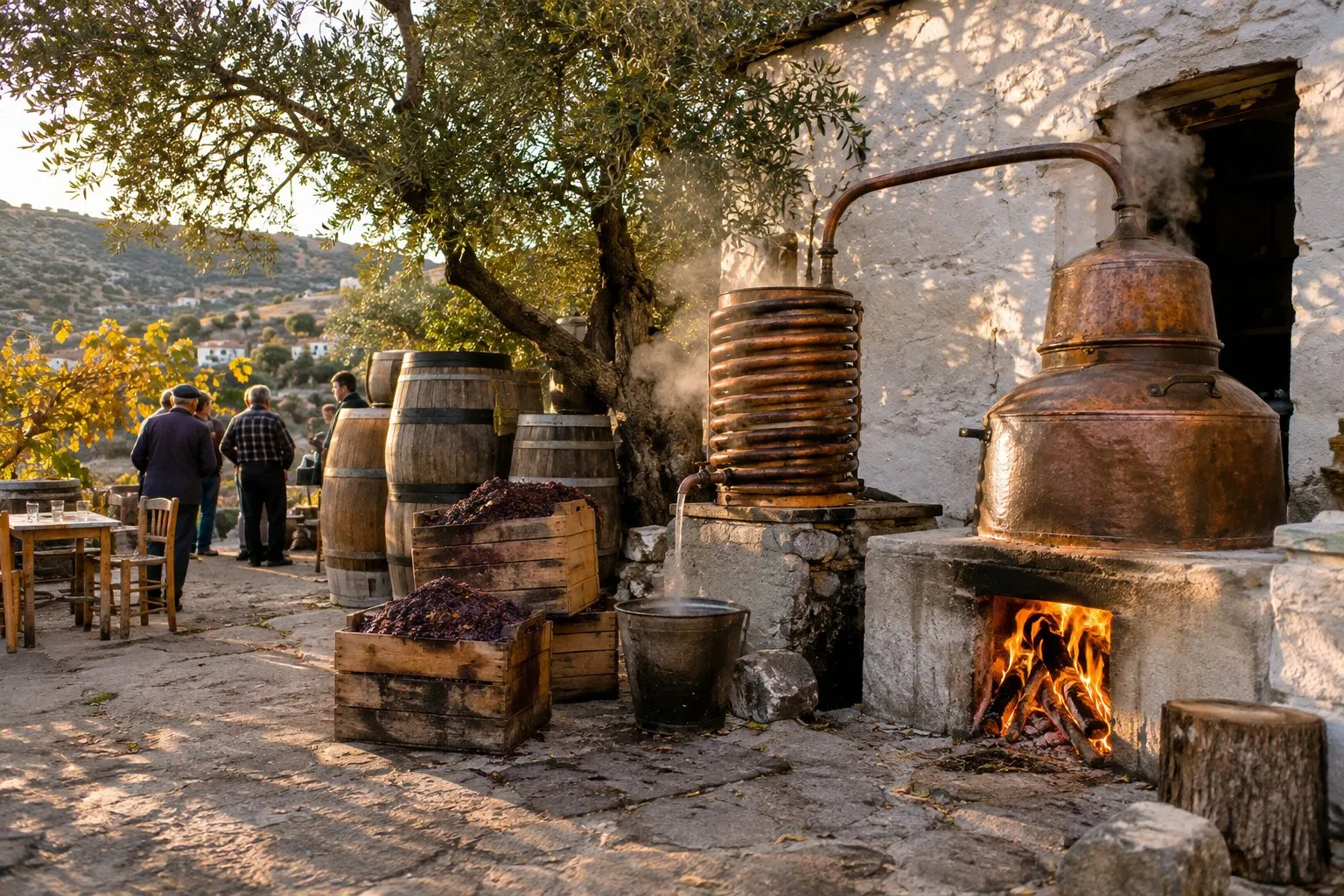
These days are known as kazanémata or rakokázana, and they are much more than work: friends and neighbours gather around the still, the freshly run raki is tasted, food is eaten and sometimes there is music. If you travel in autumn, ask in the villages or check the local events listings, because some towns organise gatherings open to visitors.
A wine with a lot of history
Wine has been made in Crete since Minoan times, and during the Venetian period its sweet wines, known as malvasia, were exported around the Mediterranean. In recent decades, the island’s wineries have set about recovering their native varieties, some of which came close to disappearing. The result is wines with a personality of their own, which make sense to try here, alongside local food.
The grapes worth knowing
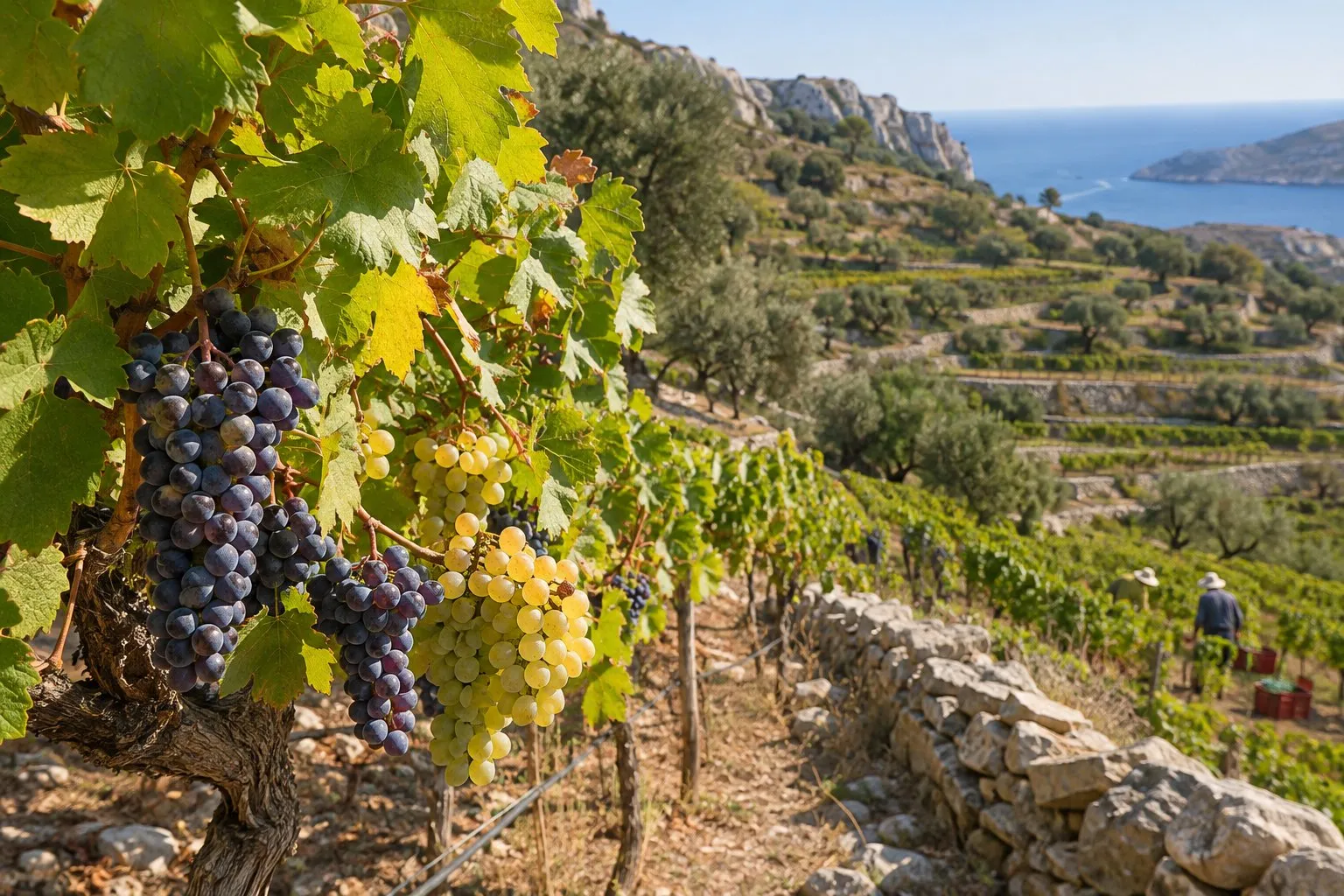
White
- Vilana: one of the most widespread whites on the island. It makes fresh wines and is the base of the whites of the Peza PDO.
- Vidiano: it nearly disappeared and was recovered from the 1980s onwards. Today it is one of the most prized, with fuller-bodied wines and aromas of peach, apricot and herbs.
- Thrapsathiri: usually blended with vilana; together they make up the whites of the Sitia PDO.
Red
- Kotsifali: aromatic and not very deep in colour. Usually blended with mandilari, which gives it colour and structure.
- Mandilari (or mandilaria): very dark and tannic, the usual partner of kotsifali.
- Liatiko: an old variety that makes light-coloured reds and also sweet wines. It is the star in Dafnes and in Sitia.
Appellations of origin
Most of Crete’s wine PDOs are in Heraklion province:
- Peza: whites from vilana and reds from kotsifali and mandilari.
- Archanes: reds from those same two grapes.
- Dafnes: liatiko, dry and sweet.
Archanes is a few kilometres from Knossos, so you can combine a winery visit with the Palace of Knossos.
In Lasithi, our province, there is the Sitia PDO, with reds from liatiko and mandilari, whites from vilana and thrapsathiri and sweet wines from liatiko, and the Malvasia Sitia PDO, reserved for sweet wines aged in barrel. It’s a good excuse to add a winery to the excursion to Sitia and the Vai palm grove.
Many good Cretan wines are sold outside the PDOs, with the Crete geographical indication or as table wine, so don’t go by the seal alone.
Where to try them
- At the taverna. House wine is usually served in carafes straight from the barrel, and in Greece it’s usual to order it by measure: half a kilo, a kilo. Many tavernas also have a list of bottled Cretan wines. If you’re unsure where to eat, here is our guide to choosing a taverna.
- At wineries. Many wineries, especially in Heraklion province, offer visits and tastings, normally by reservation. Check the conditions online before going, because they change with the season.
- In shops and wine shops. In the centre of Agios Nikolaos you’ll find bottled wines and raki from across the island.
Drink sensibly
- Raki is strong: drink it slowly, in sips and with something to eat. With the homemade kind, even more so, because its strength is hard to know.
- Alternate with water, especially in summer: the heat and sun don’t help.
- If you’re going to drive, don’t drink. Many roads in the area are winding and are harder to see at night.
- You can decline raki without any problem: a “thank you” (efcharistó) and a smile is enough.
Taking it home
Bottles are best in checked luggage and well wrapped, because hand luggage is subject to the liquids limit. If you’re travelling within the European Union, you can carry wine and spirits for personal consumption without customs formalities. You’ll find more tips on shopping and luggage in what to buy in Agios Nikolaos.
To start, you don’t need more than this: order the house wine in a taverna, try a glass of bottled vidiano or liatiko and accept the raki at the end without hurry. With that you’ll already have a good idea of what people drink in Crete.