What to do in Agios Nikolaos when it rains
It rains very little in Agios Nikolaos, and almost never in summer: between June and August you can count the rainy days on the fingers of one hand. Most of the rain falls roughly between November and March, with the odd shower in October and April. Even so, in the wettest months most days are dry, and between one rainy day and the next there are usually sunny ones.
If you get a grey day, there is no need to write it off. These are the ideas we usually give to people who ask us what to do when the sky does not cooperate.
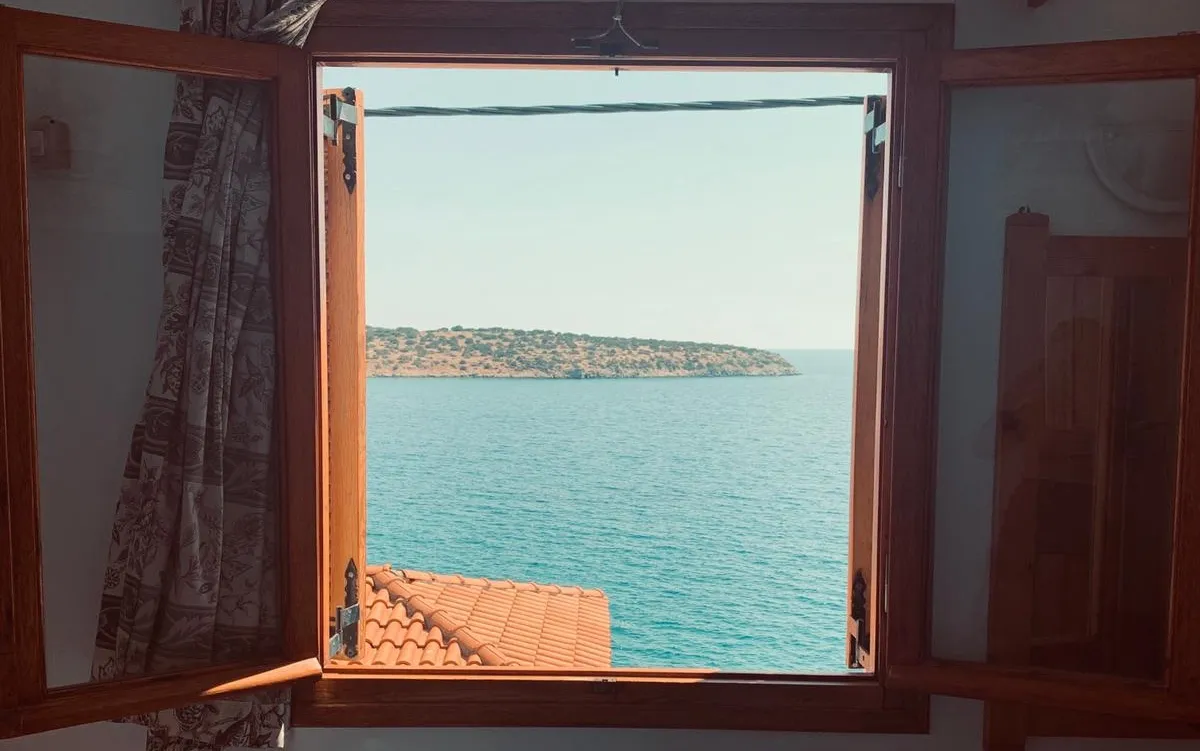
First, watch the sea from the window
It may seem like a small thing, but watching a storm over Mirabello Bay is a spectacle in itself. From the rooms with panoramic views you can see how the colour of the water and the light on the mountains change as the clouds pass. A leisurely coffee, a book and the window open as soon as the rain stops are a good start to any day.
The Archaeological Museum of Agios Nikolaos
This is the clearest indoor option in town. The museum reopened after a long renovation and now displays its collection with much more space than before. It brings together finds from eastern Crete ranging from the Neolithic to the Roman period.
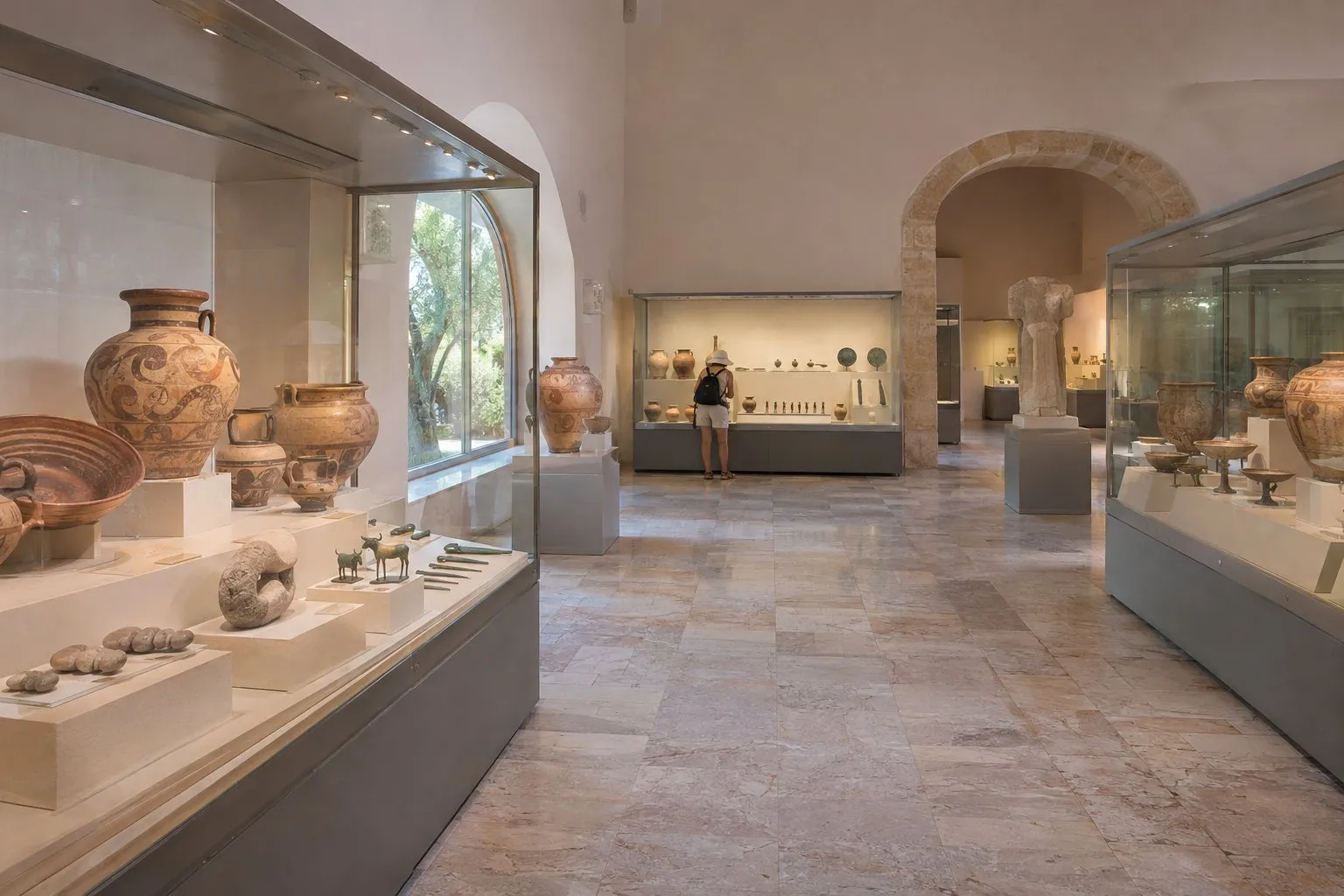
Some pieces worth looking out for:
- The so-called Goddess of Myrtos, a very ancient Minoan vessel in the shape of a woman holding a jug, found near Myrtos, on the south coast.
- The grave goods from the Agia Fotia necropolis, near Sitia, with vessels and hundreds of bronze objects.
- A Roman-era skull with the coin for Charon, the ferryman who, according to Greek mythology, carried souls to the other side.
Opening hours differ between the summer and winter seasons, and there are closing days, so it is a good idea to check them on the Greek Ministry of Culture website before going.
A small folk art museum by the lake
Next to Lake Voulismeni, in the former harbour master’s building, there is a folk art museum with traditional textiles and embroidery (some from Kritsa), objects from a Cretan house of the past, farm tools and icons. It is small and can be seen in a short time. Its opening hours have varied a lot over the years, so ask at the tourist office or phone before you go.
A long coffee or an unhurried meal
Rain is the perfect excuse to do what is done so well in Crete: sit down. Around the lake and the harbour there are cafés where you can spend the afternoon looking at the water, and the town’s tavernas are a good refuge at lunchtime.
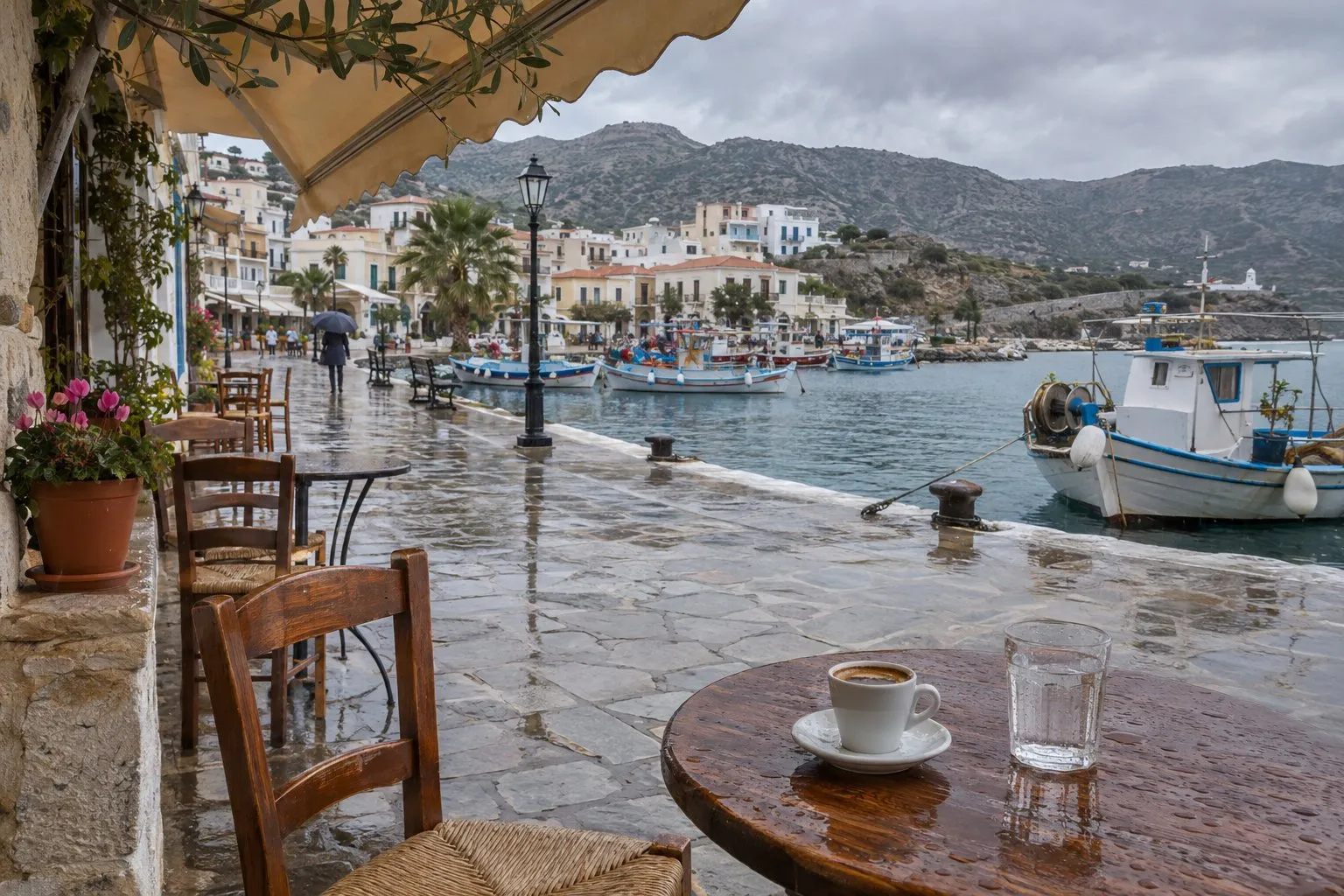
In the cooler months, spoon dishes and stews make more sense: pulses, casseroles, wild greens and vegetables with olive oil. If you are unsure how to choose a place, we leave you some tips in how to choose a taverna. And do not be surprised if a little raki turns up at the end of the meal.
Kritsa and the church of Panagia Kera
If you have a car, driving up to Kritsa is a good option for an unsettled day. The village is about ten or eleven kilometres away, on the first slopes heading inland, and before you reach it, at roughly one kilometre, is Panagia Kera, a small Byzantine church with an interior covered in frescoes, largely from the 13th and 14th centuries. It is a place to visit slowly, with your eyes turned upwards, and the rain outside does not bother you.
Kritsa, with its narrow streets and its textile and embroidery shops, is easy to explore between showers. What we do not recommend in the rain is the Lato site, which is open-air and high up: save it for a dry day. You will find more details in our article on Kritsa and its surroundings.
Heraklion: a day of museums
If the bad weather looks set to last, Heraklion is roughly an hour away by car and is home to several of the island’s best museums.
Heraklion Archaeological Museum
This is the world reference for learning about Minoan civilisation. Here are the original frescoes from Knossos, the Phaistos Disc and an enormous collection of pottery, seals and jewellery. You need at least a couple of hours.
Historical Museum of Crete
It traces the island’s history from the Byzantine period to the 20th century. Among other things, it holds the only two works by El Greco in Crete and a room dedicated to the writer Nikos Kazantzakis, with the study and library from his house in France.
If the rain gives you a break, you can combine the visit with the Palace of Knossos, on the outskirts of the city, although bear in mind that everything there is open-air.
When it clears up
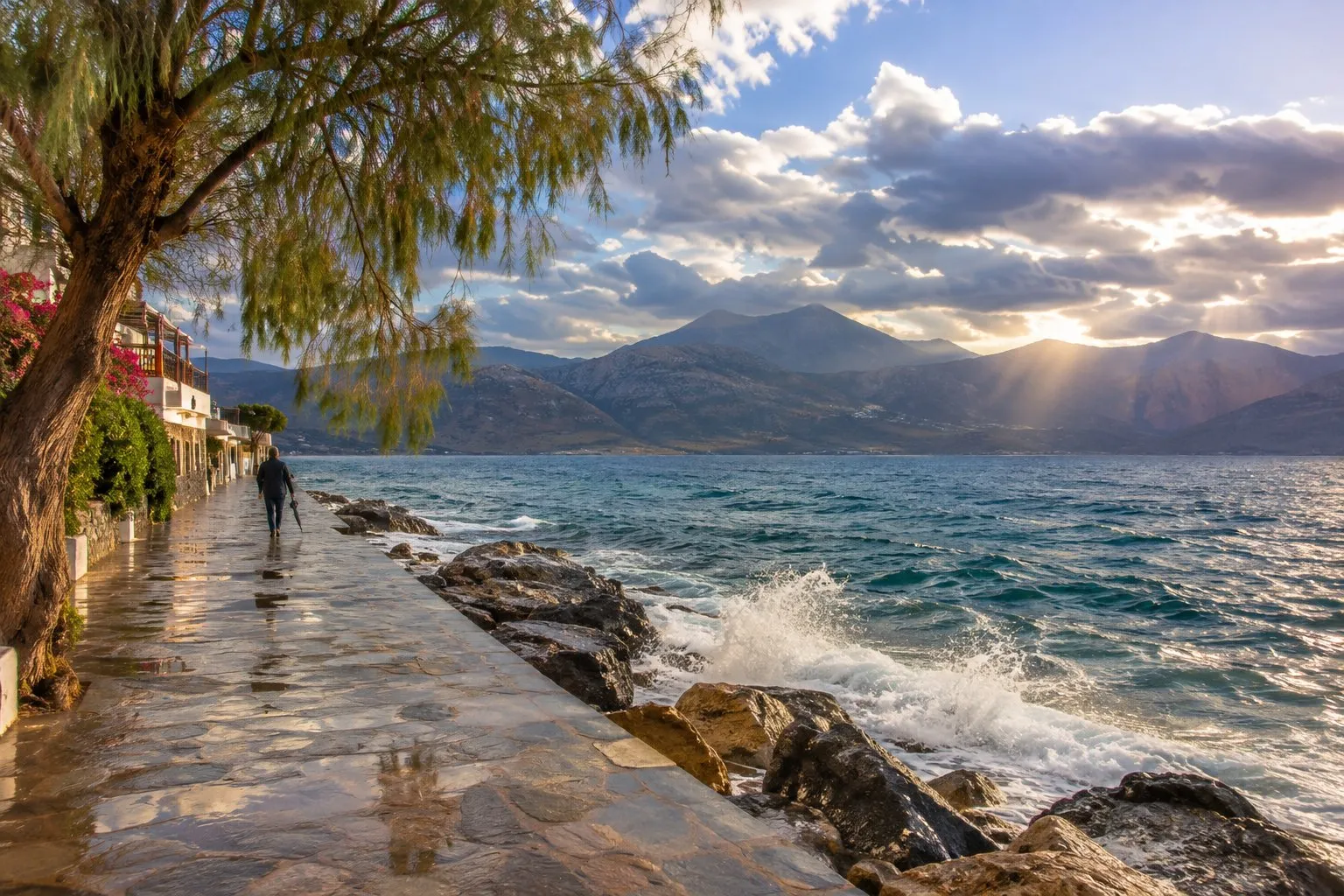
After the rain, the air is usually clean and the view over the bay opens out as far as the mountains on the other side. It is a good moment to go out for a walk: from the pension, Kitroplatia beach is one minute away, the harbour three, and the lake about six minutes on foot. The streets are quiet and the sea, if it has been windy, stays rough against the rocks for a while.
Practical tips for rainy days
- Check the forecast the day before. A rainy day often has dry windows, and it helps to know when.
- Look up opening hours before setting out. Museums and monuments keep shorter winter hours and usually close one day a week.
- Drive carefully. In the rain mountain roads are slippery and there may be stones or mud on the carriageway.
- Closed shoes and something waterproof if you come between November and March. Sloping streets and steps get slippery when wet.
- Keep the season in mind. In winter many tourist businesses close, although there are always cafés and tavernas open in town.
A rainy day in Agios Nikolaos rarely lasts long, and it often leaves the bay with the best light of the trip. If you are unsure what to do or what will be open that day, ask us: we will tell you what we know and, if we do not know, where to check.