Elounda and Plaka: A Day Out Along Mirabello Bay
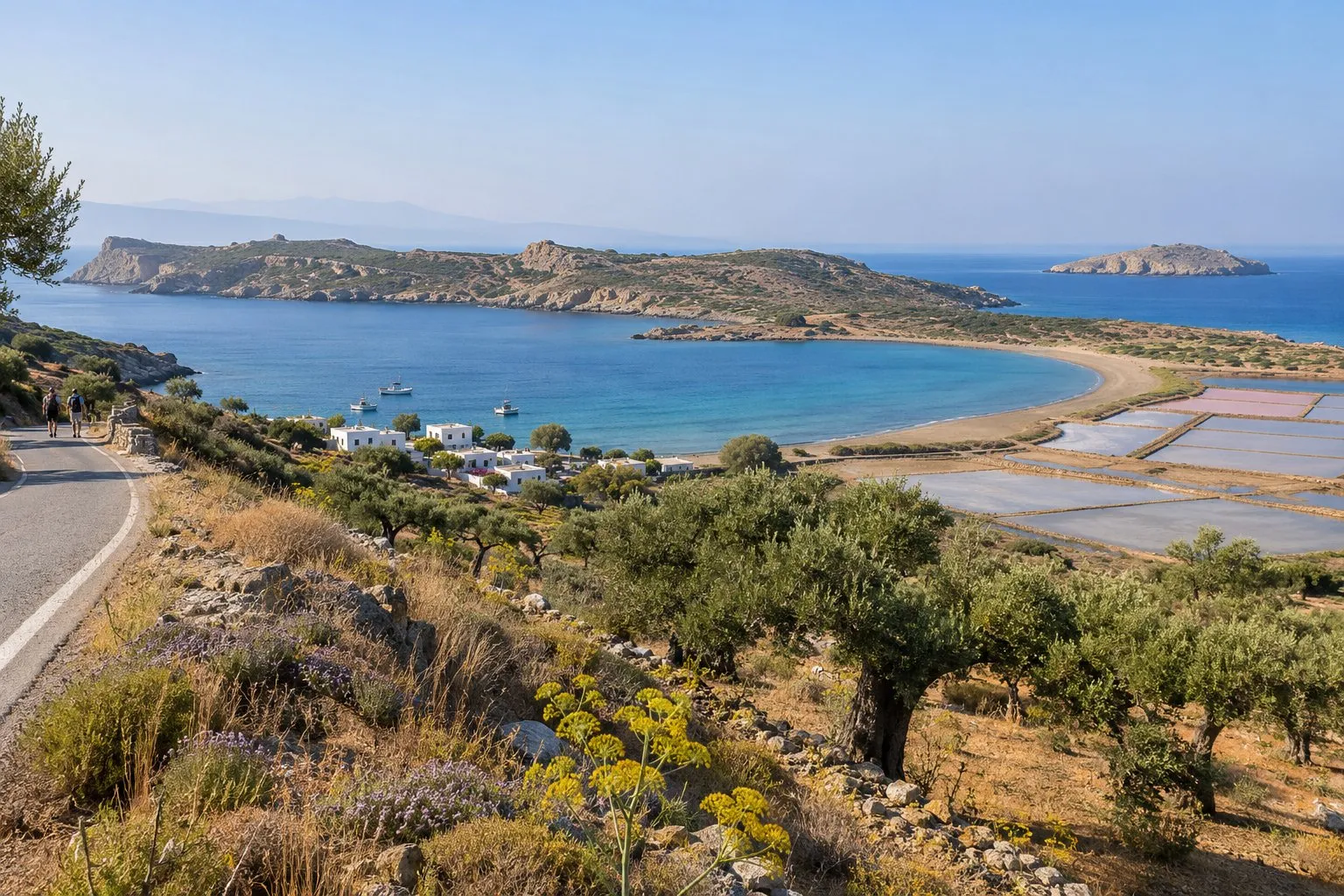
Elounda and Plaka lie north of Agios Nikolaos, on the stretch of coast where Mirabello Bay is closed off by the Spinalonga peninsula. They make a relaxed half day, or a full day if you combine them with a visit to the island. This is the route we usually recommend, from south to north.
The Road from Agios Nikolaos
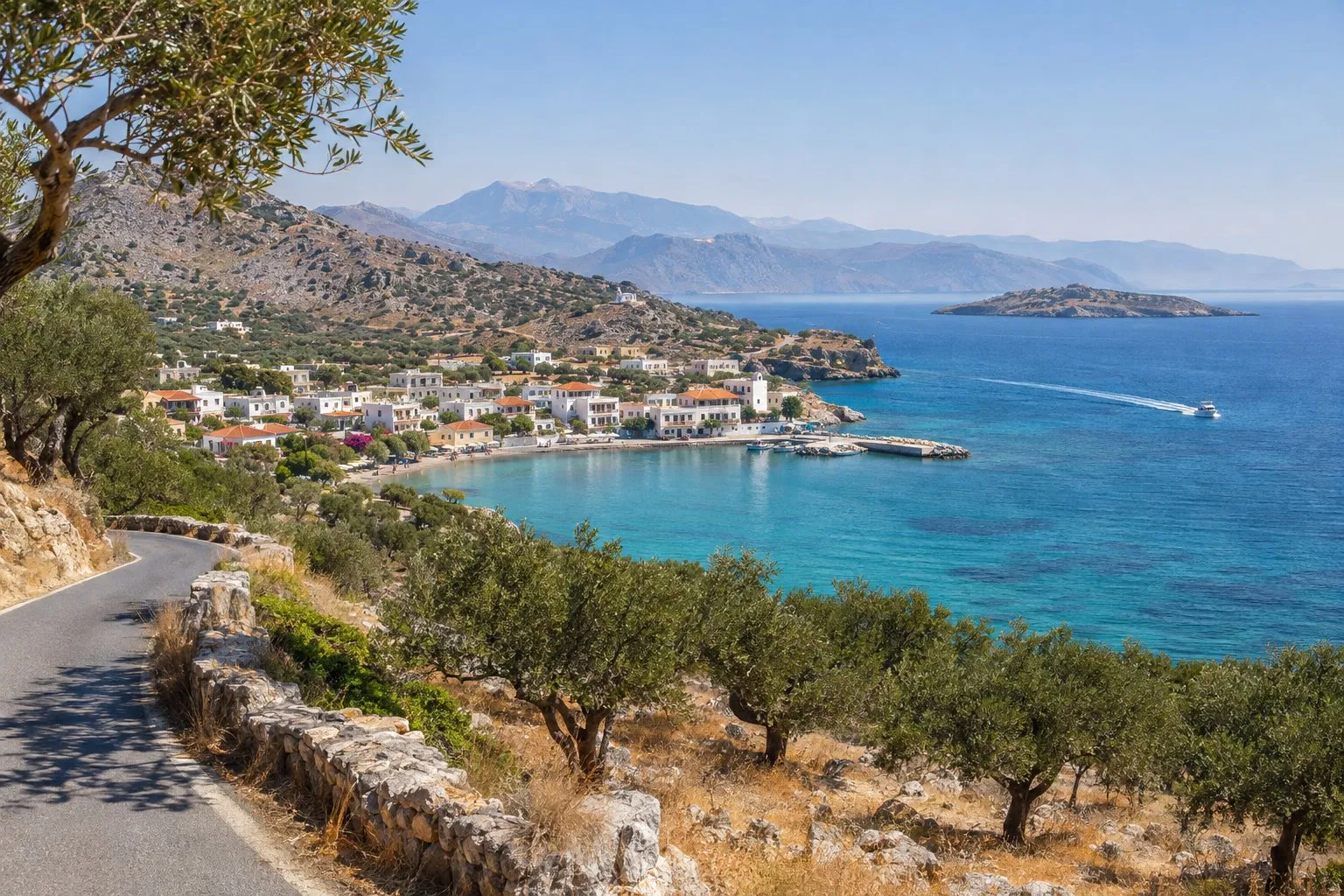
From the pension it’s about 23 minutes by car (about 15 km) to Elounda and the Spinalonga area. The road heads north and gains height above the sea, with Mirabello Bay on your right. On the descent towards Elounda the view opens out over the gulf, the peninsula and the salt pans. If you want to stop to look or take photos, do it only where there’s room to pull over: it’s a winding road with a lot of traffic in summer.
You can also do it without a car: there are scheduled buses (KTEL) from the Agios Nikolaos station to Elounda and Plaka, with timetables that change with the season. In how to get around without a car we explain how to check them.
Elounda: The Harbour and the Promenade
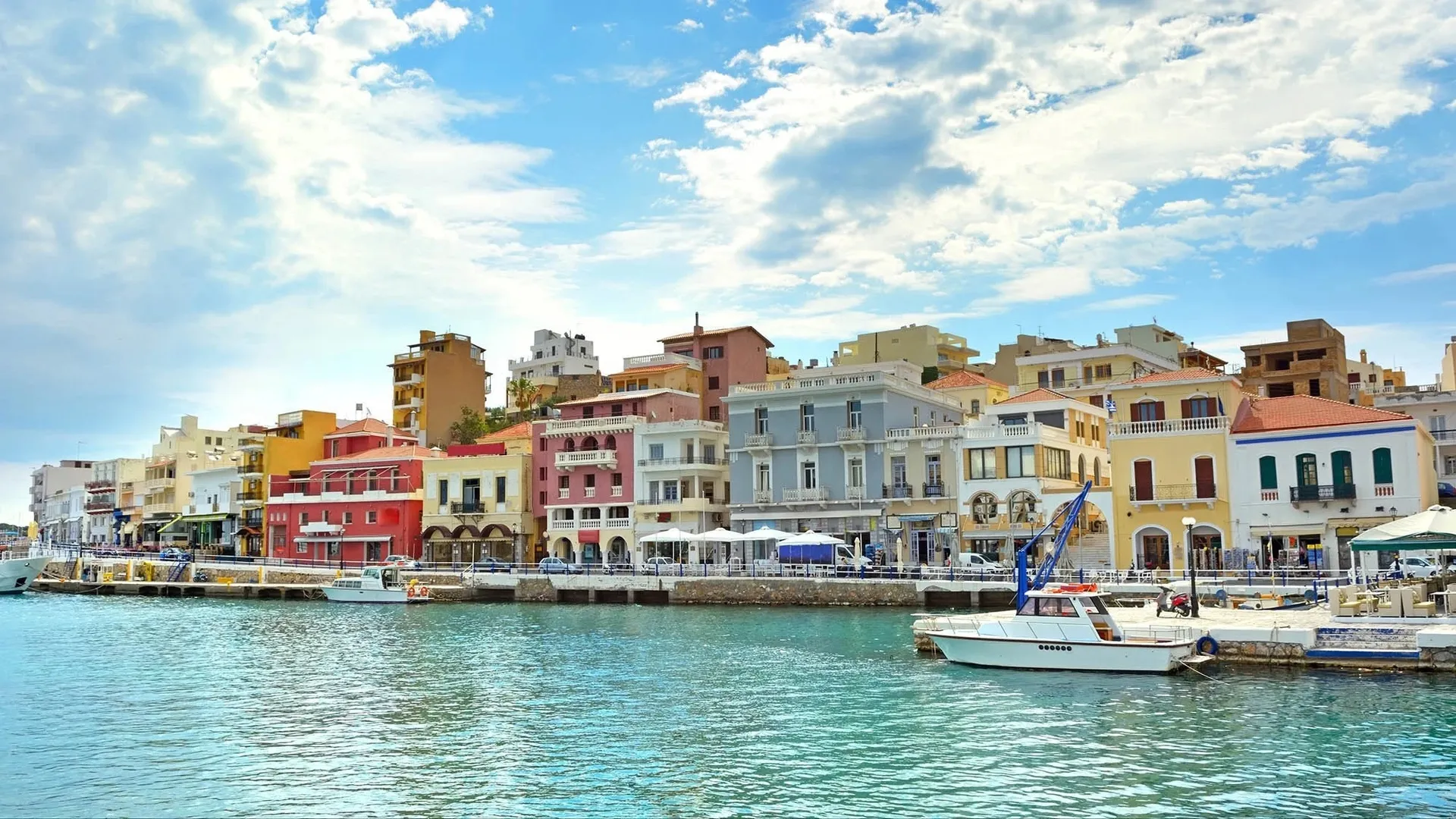
Elounda is made up of several settlements by the sea. Life centres around the harbour, in the Schisma area, with cafés, tavernas and shops. The boats to Spinalonga and the cruises around the bay leave from there.
It’s a good first stop for a coffee and to get your bearings. In summer the car park near the harbour fills up early, so the sooner you arrive, the better.
The Poros Isthmus: Salt Pans, Windmills and a City under the Water
From the centre of Elounda, a road beside the shore leads towards the Spinalonga peninsula, which is also known as Kolokitha. In a short stretch it brings together several things worth taking your time over.
The Salt Pans
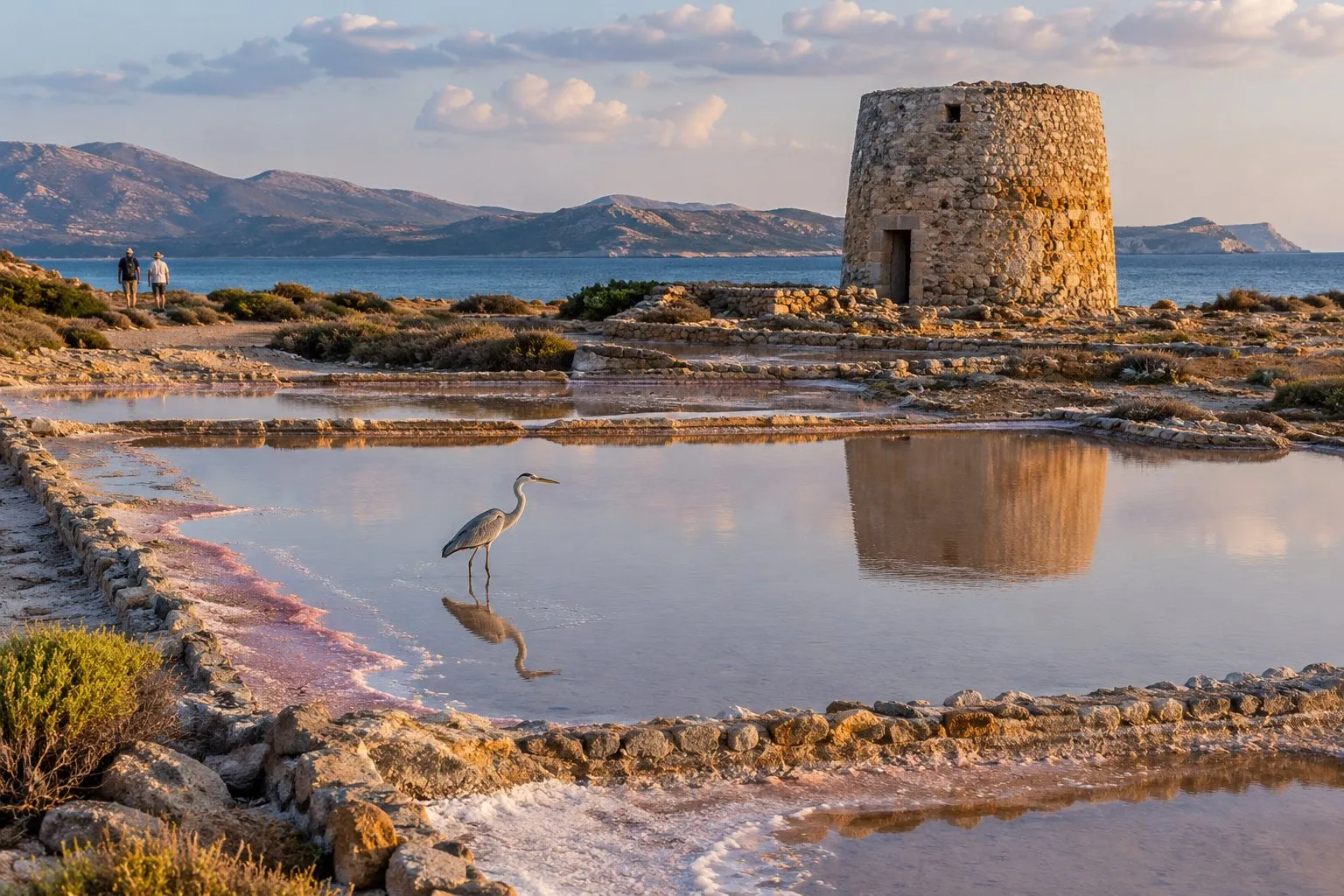
First you pass the old salt pans. Salt was already important in Venetian times, and these ponds were used until the early seventies. Today they are a wetland where you can see herons and, at certain times of year, flamingos. The stone squares that poke out of the water belong to the salt pans; they are not ancient ruins.
The Windmills and the Canal
Beside the canal there are three stone windmills, round and now disused. The canal was cut in 1897–1898, during the French administration of this part of Crete, and separated the peninsula from the mainland. A small bridge crosses it at Poros.
Olous, the Sunken City
The ancient city of Olous stood here. With the changes in the coastline over the centuries, part of its remains ended up under the water, in the shallows around Poros. When the sea is calm you can make out the bases of walls from the shore, and you see them better with a mask and snorkel. It is an archaeological site: you look, you don’t touch or take anything.
Very close by are the remains of an early Christian basilica from the 5th century, with a mosaic of dolphins and fish on the floor. Depending on the time of year, the mosaic may be covered or the site fenced off to protect it.
Kolokitha Beach
Past the canal, a dirt track continues along the peninsula. From where you leave the car, it’s a walk of about 10–15 minutes down to Kolokitha beach. The water is turquoise and the islet of Kolokitha lies opposite. The last stretch is loose stone: wear closed shoes, not flip-flops, and bring water. Many boat excursions also stop here. For your beach day, see what to bring to the beach in Crete.
Plaka, Facing Spinalonga
About 5 km north of Elounda is Plaka, a former fishing village with the island of Spinalonga right in front of it, about 750 metres away. During the leper colony years, supplies were sent to the island from here and the patients were taken across from here. The village appears in Victoria Hislop’s novel The Island, and in the Greek series based on it.
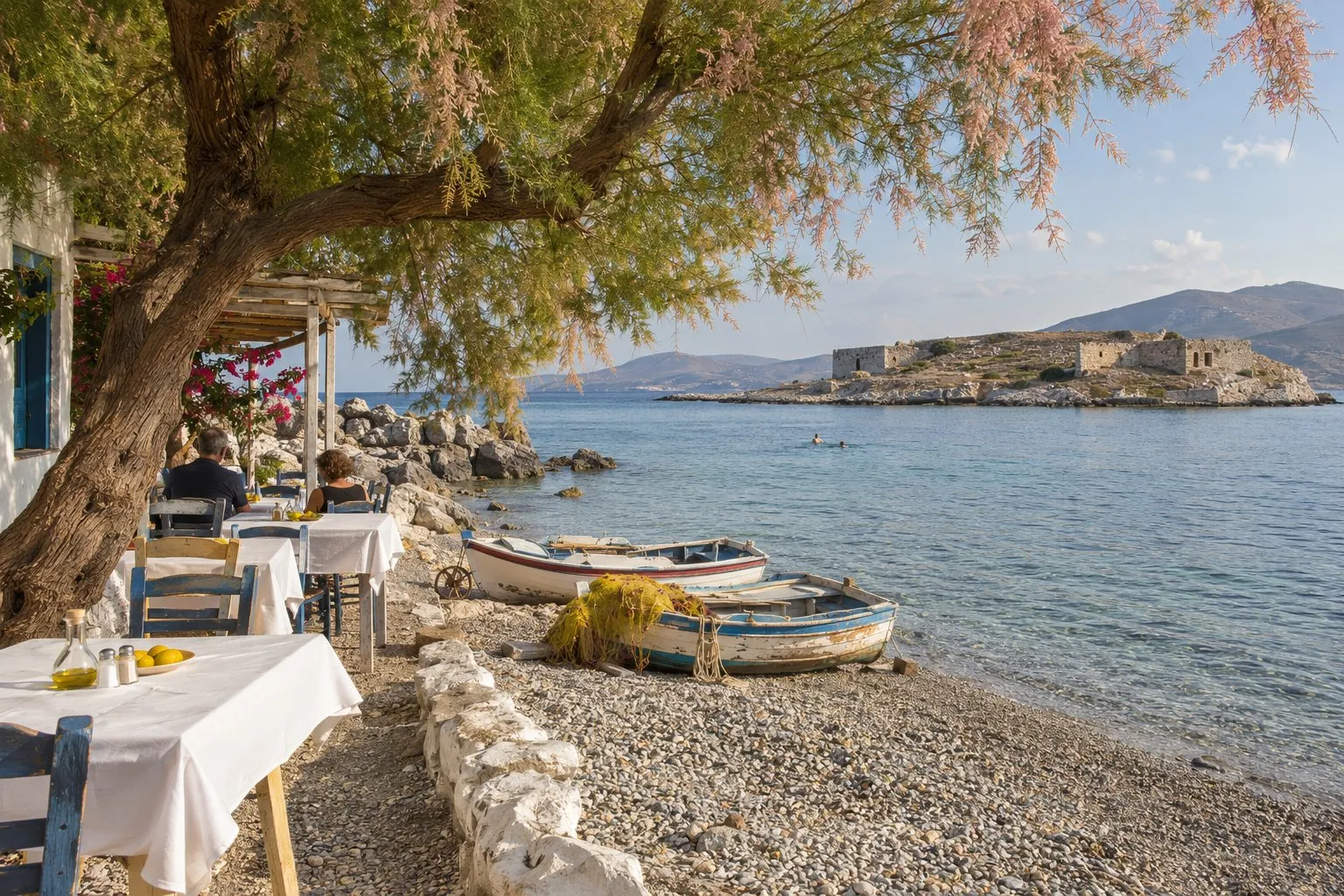
Today it’s a peaceful place to spend the afternoon:
- Boats to Spinalonga. This is the shortest crossing, about ten minutes. If you want to visit the island, it’s explained here: trip to Spinalonga.
- Swimming with a view. The beaches at Plaka are pebbly and look straight at the fortress. Water shoes are welcome.
- Eating by the sea. There are tavernas right on the front. To pick well among them, we’ve left you some pointers in how to choose a taverna.
How to Organise the Day
An order that works well in summer:
- Set out early from Agios Nikolaos along the coast road.
- Spinalonga first thing, from Elounda or Plaka, before the heat builds.
- A walk along the Poros isthmus: salt pans, windmills and the remains of Olous.
- A swim at Kolokitha or at Plaka.
- Lunch in Plaka or at the harbour in Elounda.
- Back to Agios Nikolaos in mid-afternoon.
If you’re not going into Spinalonga, the route comes down to a long morning. In spring and autumn, with less heat, the walk around the salt pans and the peninsula is more enjoyable, and it’s a good time of year to see birds in the wetland.
For a day like this it’s enough to bring water, sun protection, a swimsuit and footwear that can cope with stone and dirt. Boat and bus timetables change with the season, so check them the day before, either online or at the Agios Nikolaos bus station.