What to Bring to the Beach in Crete: A Practical Checklist
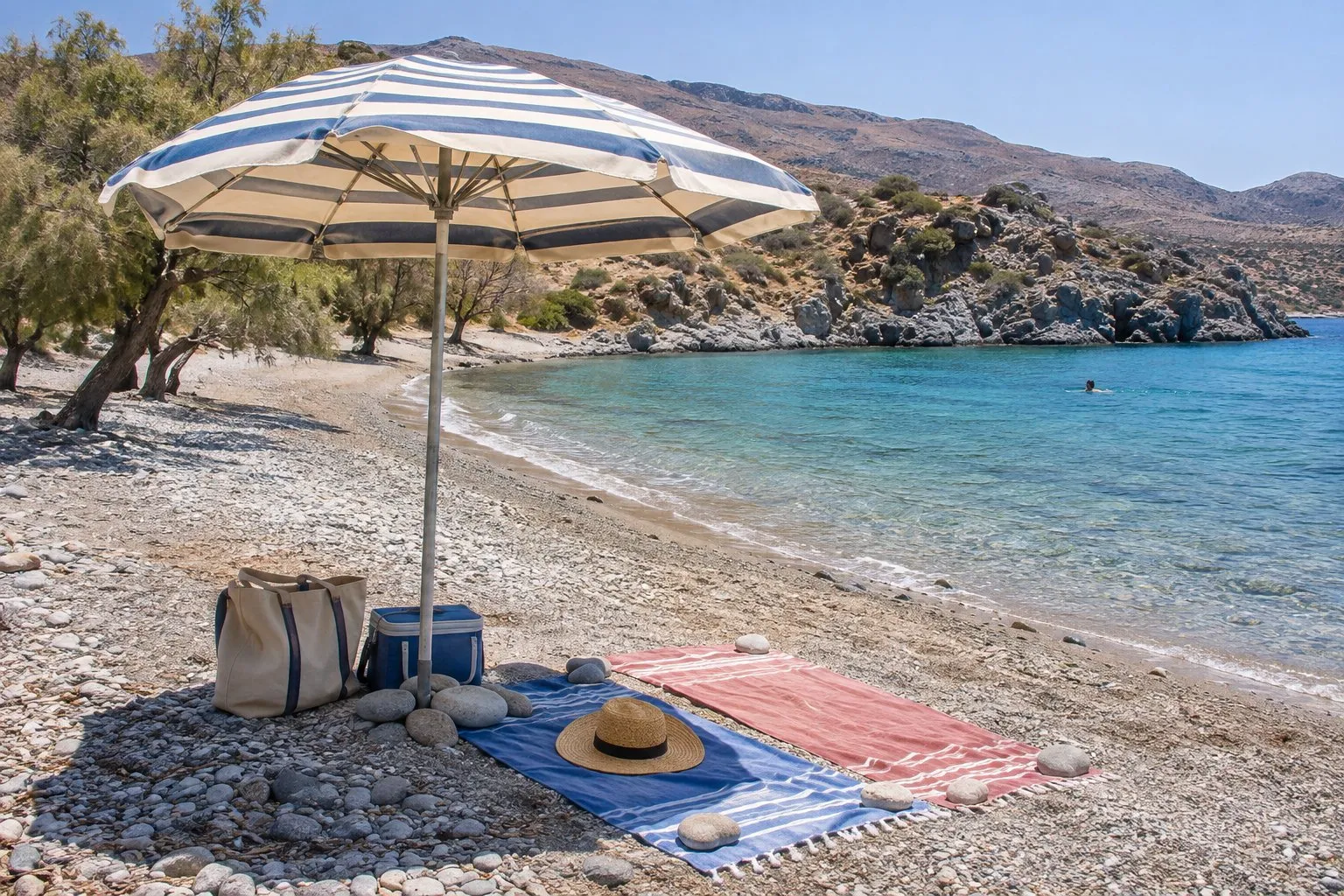
A beach day in Crete is much like one on any Mediterranean coast, but three things make the difference: the summer sun is very strong, the wind can pick up in the afternoon and many beaches are pebbly or have rocks at the water’s edge. This is the list we usually recommend, with a short version at the end to run through before you leave.
Sun Protection, More Than You Think
In summer the radiation in Crete is very high, and the sea breeze means you don’t feel the heat until you’ve already burned.
- High-factor sunscreen (30 or, better, 50). Put it on before you leave and reapply after every swim and about every two hours.
- A hat or cap and sunglasses with UV protection.
- A light T-shirt for the hours of strongest sun, and lycra shirts for the children, who spend the whole day in the water.
- Something for after the sun, such as a moisturiser or aloe cream.
If you can, avoid the middle of the day, roughly eleven to four. Going early or late in the afternoon has another advantage: fewer people and it’s easier to find a spot. And remember that you can burn under cloud or in wind too.
Shade
On organised beaches, sunbeds and umbrellas are usually available to rent. Conditions vary from one beach to another, and at some they are tied to what you spend at the bar, so ask when you arrive.
On beaches without facilities there is nothing, so bring your own umbrella. Make it a sturdy one with a good way of anchoring it in the sand: in wind, a poorly fixed umbrella can fly off and hurt someone. On some beaches there are tamarisks that give natural shade, but in summer those spots are taken early.
Footwear: Water Shoes
If you’re only going to add one thing to your usual bag, make it a pair of water shoes. Many beaches in Crete are pebbly or have stones at the water’s entrance, and on rocky areas there are sea urchins. With water shoes you get into the water comfortably and can go near the rocks without worry.
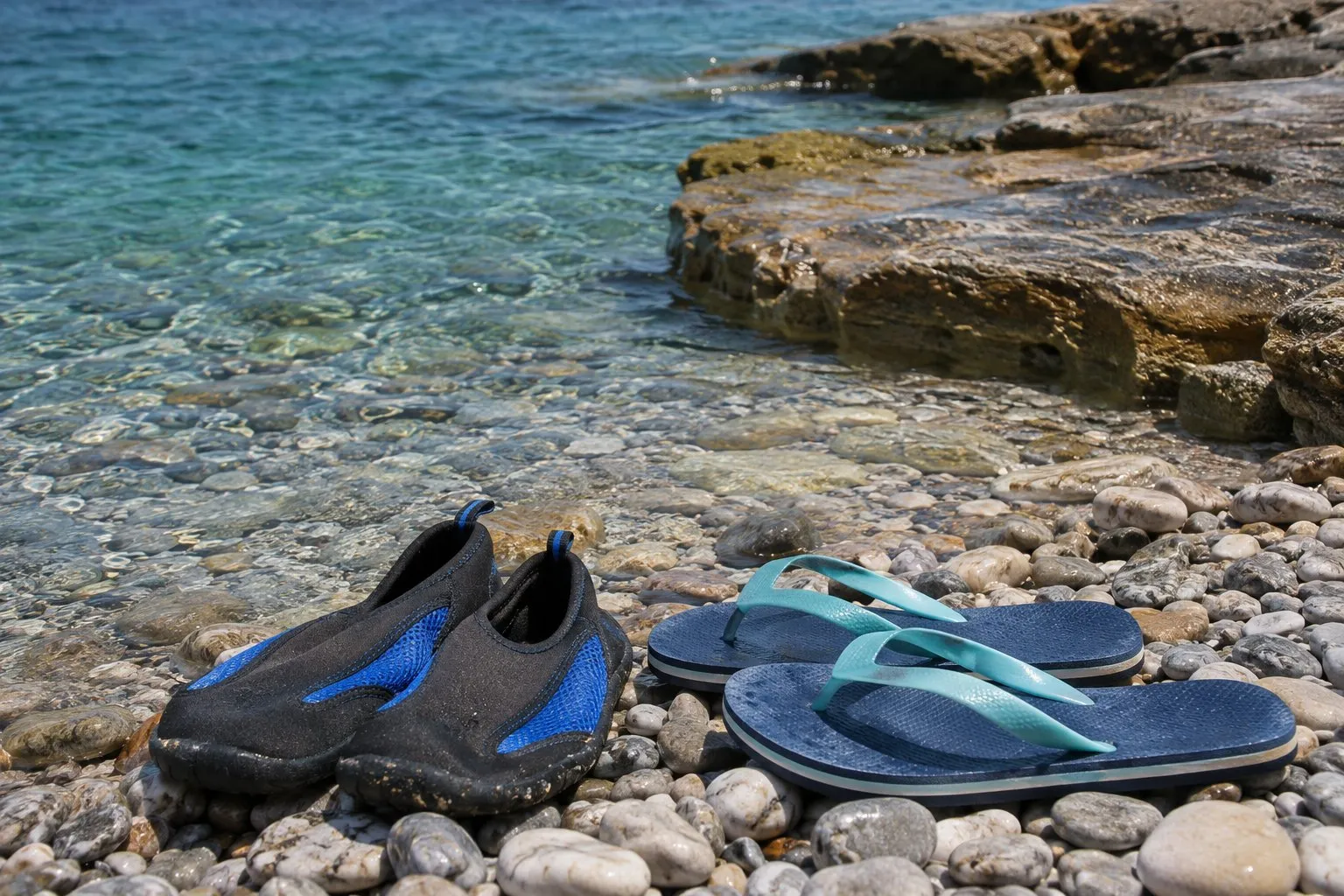
Bring flip-flops or sandals too: at midday, the sand and stones burn.
Water and Something to Eat
Bring more water than you think you’ll drink, preferably in a cool box or insulated bottles. On organised beaches there’s usually a bar or kiosk, but in coves without facilities there’s nowhere to buy anything. Fruit, nuts and something salty help you get through a hot day.
For the Wind
In summer the meltemi often blows, a northerly wind that in Crete comes from the northwest. It usually appears between May and September, is stronger in the afternoon and often dies down at night, although sometimes it lasts several days in a row. On exposed beaches it kicks up waves and sand.
- Clips for your towel and a bag that closes well, so the sand doesn’t get into everything.
- A light layer for when the wind turns cool.
- Check the forecast before choosing a beach. On windy days, look for a sheltered beach.
If the sea is very rough, don’t swim, and if there is a lifeguard, follow their instructions.
For Seeing the Seabed
The water is usually very clear, especially by the rocks. A snorkelling mask and snorkel give hours of entertainment, to children and adults alike. A waterproof case for your phone is also handy if you want to take photos near the water.
Money and Valuables
Bring some cash: more and more places take cards, but at some kiosks and small beach bars you can’t always pay that way. Leave at home what you don’t need and don’t leave valuables in sight, either on your towel while you swim or inside a parked car.
Local Customs
- Cover up when leaving the beach. A sarong or a T-shirt is enough to go into a taverna or stroll through the village. If you’re going to visit a church or monastery, bring something to cover your shoulders and knees.
- Topless and nudism. On many tourist beaches going topless is common, but on village beaches and the more family-oriented ones it’s seen less. Nudism is limited to certain specific beaches; it has no place on city beaches. If in doubt, look at what the people around you are doing.
- Take your rubbish with you, cigarette butts included. A small bag takes up little room.
- Don’t take stones, sand or shells as souvenirs. It’s frowned upon and on some beaches in Greece it’s expressly forbidden and fined.
- No fires. In summer the fire risk is high: no bonfires or barbecues on the beach.
- Respect protected areas, such as the wetland next to Almiros beach in Agios Nikolaos.
At the Start and End of the Season
In May or at the end of October the water is cooler and the afternoons turn chilly sooner. A quick-drying towel and a sweatshirt for after your swim make a difference. If you’re deciding when to come, you’ll find more information in when to visit Agios Nikolaos.
The Checklist, to Run Through
- High-factor sunscreen and something for after the sun
- Hat or cap and sunglasses
- Light or lycra T-shirt
- Water shoes and flip-flops
- Towel, preferably quick-drying, and clips
- Sturdy umbrella, if you’re going to a beach without facilities
- Plenty of water and something to eat, in a cool box
- Snorkelling mask and snorkel
- Waterproof case for your phone
- Some cash and a card
- Sarong or T-shirt for leaving the beach
- A bag for rubbish
- A light layer for the wind or the evening
To Finish
If you’re staying with us, Kitroplatia is a minute from the pension, so if you forget something you can nip back for it. For the more distant beaches, especially those without facilities, it’s worth going over the list before you set out. If you still don’t know which one to go to, in beaches of Agios Nikolaos we tell you what each one is like, and if you’re travelling with children, you’ll find more ideas in Agios Nikolaos with children.